在1999年,距离发明万维网十年之后,蒂姆·伯纳斯-李设想了智能代理,它们将处理搜索、规划和日常任务,但网络体验仍然是手动的。向行动转变在2022年随着ChatGPT和当今的大语言模型开始,它们能够总结和推理,但正越来越多地获得工具以作为代理行动。
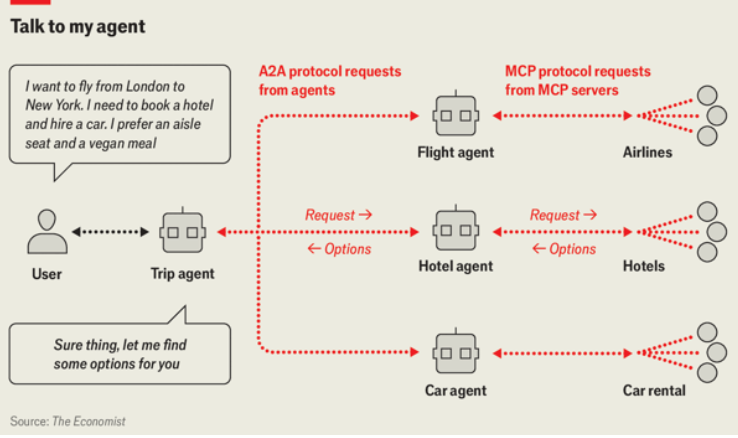
为了让代理跨服务运行,标准正在出现:Anthropic的模型上下文协议(MCP)用于查询和使用API,以及谷歌的A2A协议用于代理对代理的协作。12月9日,Anthropic、OpenAI、谷歌、微软等宣布了Agentic AI Foundation,而微软的NLWeb和新的代理驱动浏览器扩展了基于聊天的访问,其中包括OpenAI在9月启用站内直接购买,以及既有公司在11月的反击。
当今的注意力经济是可量化的:Alphabet和Meta预计每年从广告获得接近五千亿美元,超过其收入的80%,而营销人员可能越来越多地瞄准“代理注意力”。代理可能把使用规模扩大到超出人类“数百或数千”倍,在几秒内扫描数千个页面,但错误和提示注入风险促使采取防护措施,例如受信服务限制、只读模式,以及对敏感行动的人类确认。
In 1999, a decade after inventing the world wide web, Tim Berners-Lee envisioned intelligent agents that would handle searching, planning, and routine tasks, yet the web experience remained manual. The shift toward action began in 2022 with ChatGPT and today’s LLMs, which can summarize and reason but increasingly gain tools to act as agents.
To let agents operate across services, standards are emerging: Anthropic’s Model Context Protocol (MCP) to query and use APIs, and Google’s A2A protocol for agent-to-agent coordination. On December 9, Anthropic, OpenAI, Google, Microsoft and others announced the Agentic AI Foundation, while Microsoft’s NLWeb and new agent-powered browsers extend chat-based access, including OpenAI enabling direct purchases in September and incumbents pushing back in November.
Today’s attention economy is quantified: Alphabet and Meta were expected to earn nearly half a trillion dollars a year from ads, more than 80% of their revenues, and marketers may increasingly target “agent attention”. Agents could scale usage “hundreds or thousands” of times beyond humans, scanning thousands of pages in seconds, but errors and prompt injection risks drive safeguards such as trusted-service limits, read-only modes, and human confirmation for sensitive actions.
Source: The next version of the web will be built for machines, not humans
Subtitle: AI will surf, shop and act on your behalf
Dateline: 12月 11, 2025 06:00 上午