面对年轻一代饮酒意愿持续低迷的严峻现实,西方酒业正经历剧烈的行业重塑。IWSR行业数据显示,2025年全球酒精消费量连续第三年萎缩2%,西方前十大上市酒企的合计总市值在过去五年内从5,000亿美元断崖式跌至3,200亿美元。为了在收缩的市场中抢夺存量蛋糕,长期以来啤酒看球赛、红酒配晚餐、烈酒夜狂欢的传统消费边界被彻底打破。各大酒厂在纷纷推出无酒精替代品的同时,开始全方位入侵彼此的核心消费场景,啤酒巨头、葡萄酒庄与烈酒巨头之间的跨界厮杀空前激化。
烈酒巨头正大举抢占传统属于啤酒的户外体育与大型文娱活动阵地。帝亚吉欧(Diageo)斥巨资赞助了在北美举办的足球世界杯,保乐力加旗下爱尔兰威士忌尊美醇(Jameson)则成为美职联(MLS)官方赞助商。意大利金巴利集团(Campari)更是直接在酒吧与音乐节现场推广“桶装生啤式”阿佩罗起泡鸡尾酒(Aperol Spritz),在米兰的一场演唱会上单场售出2.2万杯;金巴利声称该模式已抢下意大利高端啤酒市场1.5%的份额,并正迅速向德国与英国扩张,对啤酒的传统分销渠道构成直接渗透。
与此相对应,啤酒巨头与葡萄酒商则通过预调即饮酒(RTD)实现强力反击。2025年全球RTD销量逆势增长3%,高端品类增幅更突破15%。百威英博(AB InBev)在做大Cutwater罐装鸡尾酒后,今年初又控股了利乐包葡萄酒调酒商BeatBox;摩森康胜(Molson Coors)于3月收购了摩纳哥鸡尾酒(Monaco Cocktails);全球最大葡萄酒商嘉露(Gallo)则凭借旗下的High Noon成为全美即饮酒领跑者。相比之下,传统烈酒商因过度依赖经典老品牌且缺乏啤酒企业庞大的冷链分销网络,在RTD竞争中步履蹒跚。在主营业务焦虑驱动下,酒企甚至开始跨界探索大麻素饮料,以期在这场存量博弈中捕捉新的增长动能。
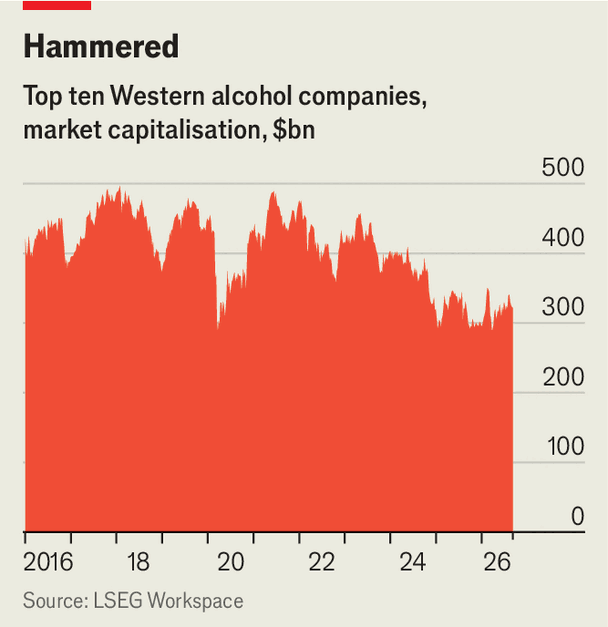
Confronted with structural sobriety among younger consumers, Western alcoholic-beverage manufacturers face severe market compression. Global alcohol consumption dropped by 2% in 2025—marking its third consecutive annual decline—while the collective market valuation of the West’s top ten listed drinks conglomerates tumbled from $500bn to $320bn over the past five years. In response to this systemic slump, traditional beverage boundaries dividing brewers, vintners, and distillers have disintegrated. Companies are aggressively launching non-alcoholic alternatives while invading rival drinking occasions, completely disrupting historic segment specialisations across sports stadiums, restaurants, and late-night nightlife venues.
Distillers are spearheading an aggressive assault on beer’s historic stronghold over mass-audience spectator events. Diageo heavily sponsored the football World Cup across North America, while Pernod Ricard’s Jameson became the official whiskey partner of Major League Soccer. Beyond lucrative sports sponsorships, spirits manufacturers are deploying operational innovations to bypass glass bottles: Italian group Campari introduced aperitifs on tap at massive music events—selling 22,000 draft Aperol Spritz cocktails during a single Milan concert. Campari claims its draught cocktails have captured 1.5% of Italy's premium-beer market, with aggressive rollouts now targeting Germany and Britain.
Simultaneously, brewing conglomerates and large wineries are retaliating by dominating the explosive ready-to-drink (RTD) canned-cocktail category. Global RTD sales expanded by 3% last year, with premium lines surging over 15% on consumer convenience. AB InBev deepened its canned cocktail footprint by acquiring a majority stake in carton-maker BeatBox Beverages alongside Cutwater Spirits, while Molson Coors bought Monaco Cocktails and Californian wine powerhouse Gallo scaled its best-selling High Noon brand. Conversely, legacy distillers have lagged in RTDs due to fears of cannibalisation, brand conservatism, and weaker convenience-store distribution compared to breweries. As industry anxiety spurs aborted mergers, drinks makers are increasingly exploring cannabinoid-infused beverages to revive growth.
Source: As booze sales fall, competition among drinks-makers intensifies
Subtitle: The line between brewers, vintners and distillers is blurring
Dateline: Sep 10th 2026