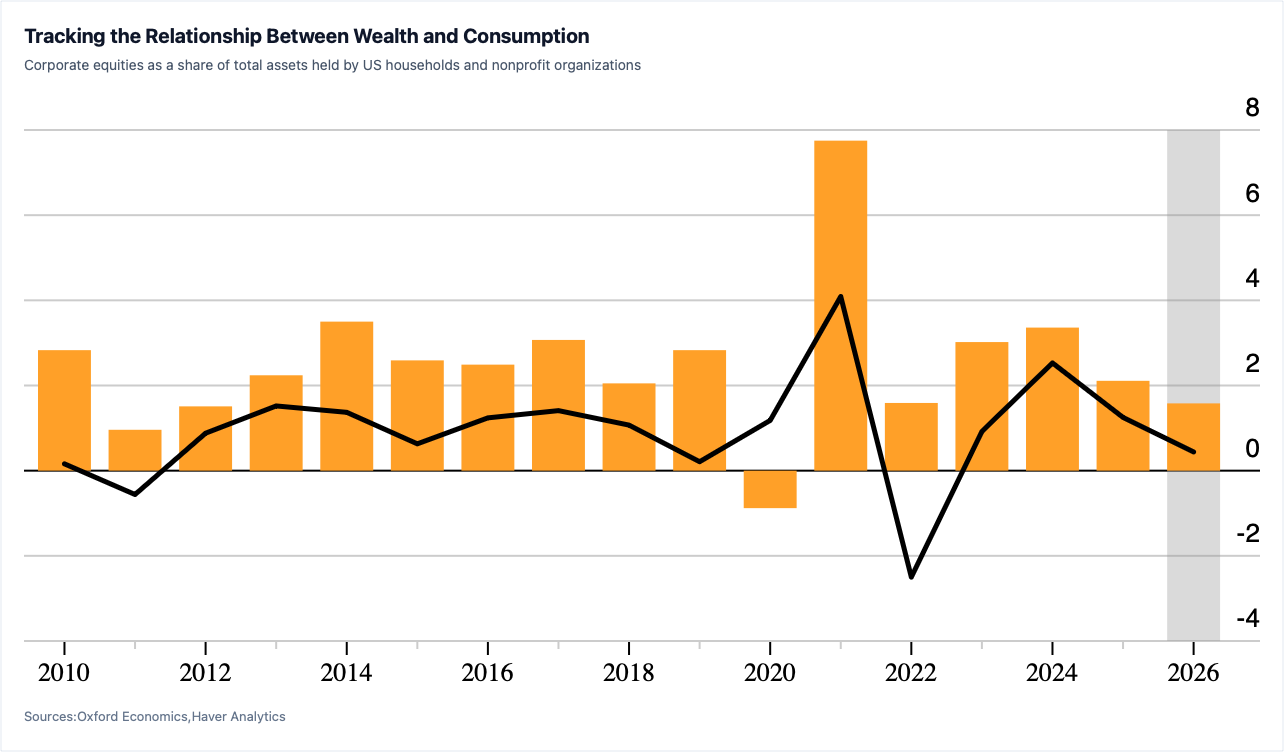
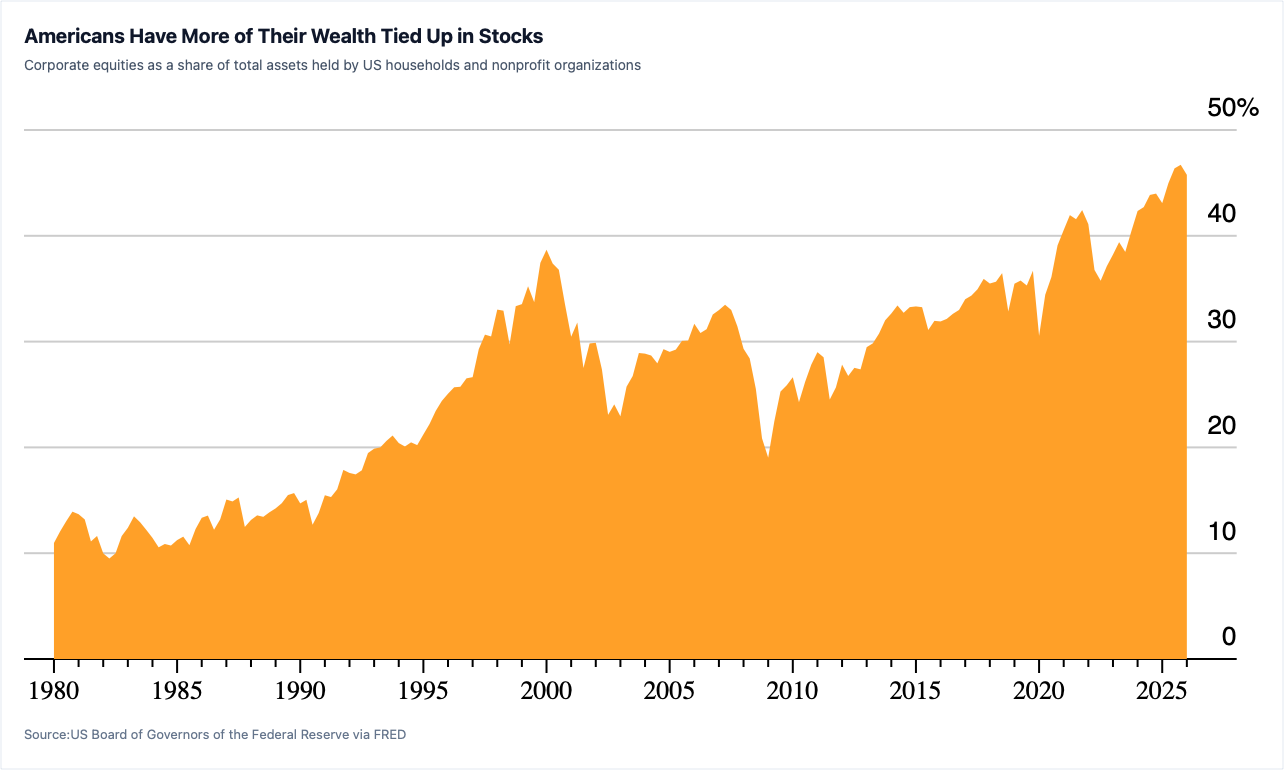
经济学家将资产价格上涨带动消费增长的连锁反应称为「财富效应」,认为这是近年来美国经济展现韧性的关键因素。牛津经济研究院估算,自新冠疫情以来,财富效应推动了美国消费支出增长的约三分之一;截至2025年8月的12个月内,美国科技股的飙升为家庭带来了约2500亿美元的额外消费。目前约58%的美国成年人持有股票,股票占家庭金融资产的比例达到历史最高的46%,使得这一效应比以往更加显著。
然而财富效应是一把双刃剑。彭博经济团队模拟显示,若人工智慧泡沫破裂导致标普500指数下跌约20%,全球将蒸发1.6兆美元的GDP,美国经济将被推向衰退边缘。由于人们对损失的感受远强于对收益的感受,消费者紧缩支出的冲击将十分剧烈。加上外国投资者持有美国股市的比例已达创纪录的18%,一旦市场下行,其影响将波及全球。
Micron Technology's stock has surged nearly 700% over the past year, fueled by the AI boom and soaring chip demand, turning many of its Idaho-based employees into overnight paper millionaires. Wealth manager JT Belnap has witnessed clients buying luxury trucks, making charitable donations, and taking dream vacations as the windfall ripples through the local economy, with businesses like Silverhawk Aviation Academy reporting strong demand for helicopter date nights and private jet charters.
Economists attribute much of the US economy's recent resilience to the "wealth effect"—the tendency for people to spend more when their asset values rise. Oxford Economics estimates this effect has driven roughly one-third of the increase in US consumer spending since the pandemic, with tech stock gains alone generating $250 billion in additional household spending in the twelve months through August 2025. The effect is amplified today because stock ownership is more widespread than ever, equities constitute a record 46% of household financial assets, and an aging population increasingly depends on portfolio wealth for spending decisions.
Yet the wealth effect cuts both ways. Bloomberg economists modeled a scenario in which the AI bubble bursts and the S&P 500 drops approximately 20%—roughly half the magnitude of the dot-com crash—finding it would erase $1.6 trillion in global GDP and push the US to the brink of recession. Because loss aversion makes consumers react more sharply to declines than to gains, and because foreign investors now hold a record 18% of the US market, a significant downturn would trigger a severe consumer retrenchment with worldwide repercussions.