俄罗斯对乌克兰的全面战争进入残暴的新阶段,大规模部署喷气式“见证者”无人机并加速弹道导弹生产,战火全面蔓延至后方。尽管在40至80公里宽的前线“杀戮禁区”内,乌军在新任总司令德拉帕季领导下顽强抵抗,今年俄军净领土推进仅约100平方公里(占乌2014年前国土的0.017%),俄方阵亡人数据乌方估计达60万、月均折损2.2万至2.3万人,已超过其每月3万至3.1万人的征兵补充;但俄方在远程技术上建立起严峻优势。俄军喷气式“见证者”今年生产目标达2.4万架(目前仅消耗约1,000架),每月可发射逾百枚弹道导弹,并利用无人机机载无线电中继网将200公里纵深内的动态猎杀精确化,严重威胁缺乏“爱国者”拦截弹的乌克兰防空体系。
俄军的系统性轰炸正对乌克兰经济基础与交通生命线造成致命打击。8月份乌克兰钢铁产量同比暴跌60%,基辅仓储能力损毁高达80%,年内已有超过250台铁路机车被毁,黑海敖德萨深水港自7月起实际上遭俄军封锁,直接威胁占去年乌克兰GDP超10%的农产品出口。随着严冬逼近,基辅脆弱的集中供暖和电网面临崩溃风险,若关键的马卡里夫750千伏变电站遭毁,首都日均供电将从16小时锐减至4小时;空袭警报频发导致学校与企业反复中断,加之近百万人在前线服役、百万人逃避兵役,人口外流正急剧侵蚀国家的劳动力与税基。
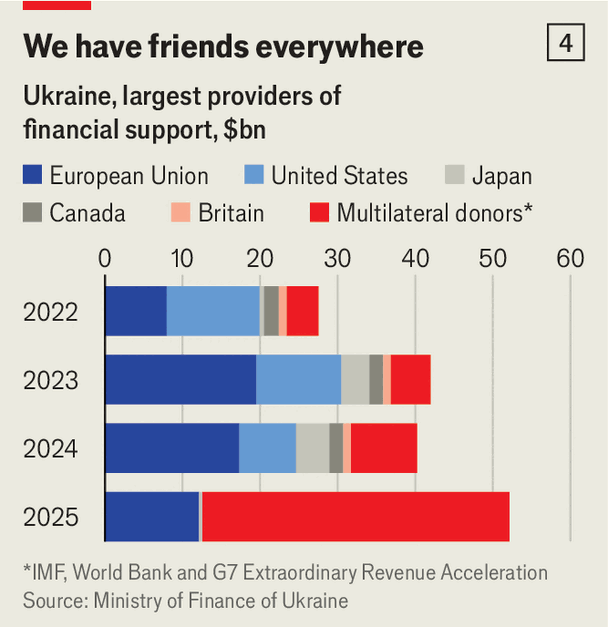
严峻的战局使得乌克兰面临空前的财政断崖与政治考验。新总理科列茨基预计俄军新一轮空袭仅前几周就导致税收损失700亿格里夫纳(16亿美元),泽连斯基此前向欧洲求援以填补270亿美元的军费缺口,而财长马琴科指出2027年尚有326亿美元的额外外部融资缺口。尽管乌克兰前20大纳税企业中近半数为本土新兴军工科技公司,央行拥有近500亿美元外汇储备,且欧盟正提供900亿欧元(1,040亿美元)贷款支持,但议会对改革要求的立法僵局、执政党议会领袖阿拉哈米亚面临的反腐调查,使急需的外部资金拨付面临变数;在特朗普特使推动有限技术停火的前景下,乌克兰唯有依靠自身坚韧与欧洲加速注资方能熬过难关。
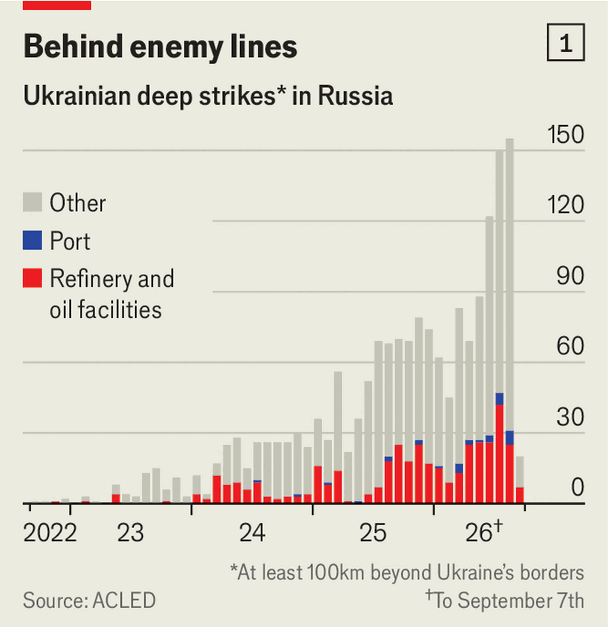
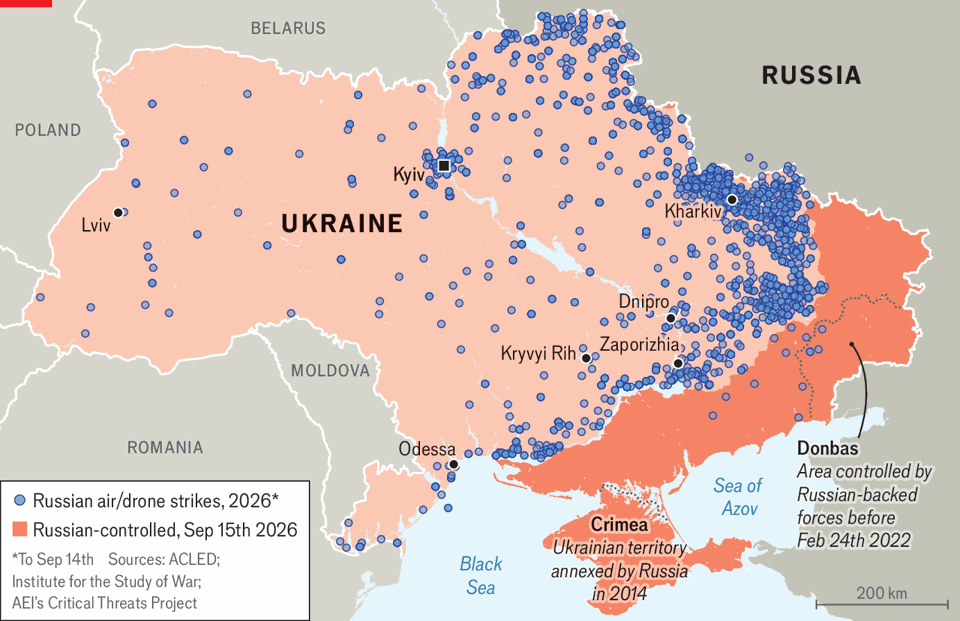
Russia’s war against Ukraine has escalated into a destructive new phase of total warfare characterized by the massive deployment of jet-powered Shahed drones and intensified ballistic missile strikes targeting deep behind the front lines. While front-line combat remains locked in a lethal 40-to-80km “kill zone” where Ukrainian forces under Commander-in-Chief Mykhailo Drapatyi limit Russia’s net territorial gain this year to roughly 100 square kilometres (0.017% of pre-2014 territory)—inflicting 22,000 to 23,000 monthly casualties against cumulative Russian combat deaths estimated by Kyiv at 600,000—Russia’s production surge outpaces Ukraine’s depleted air defences. Moscow targets annual production of 24,000 jet Shaheds having launched only 1,000 so far, deploys over 100 ballistic missiles monthly, and utilizes aerial radio-mesh relays to dynamically hunt moving locomotives across a 200km operational depth.
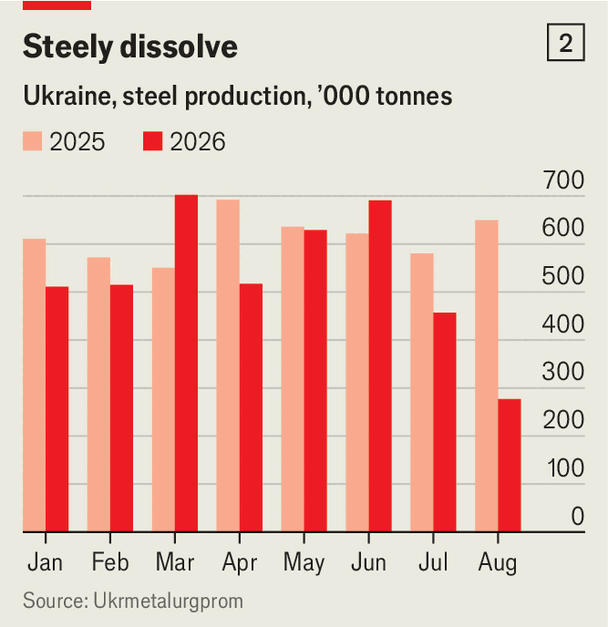
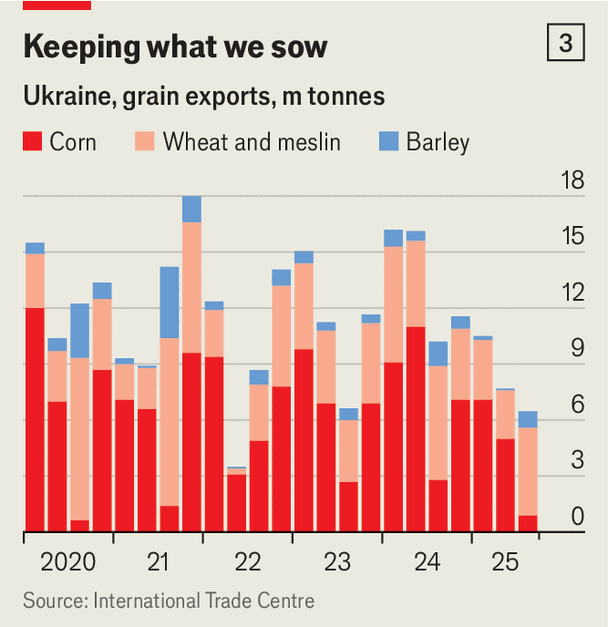
This bombardment is methodically dismantling Ukraine’s economic backbone, critical transport arteries, and urban civilian infrastructure ahead of freezing winter months. August steel production plummeted by 60% year-on-year, logistics destruction knocked out up to 80% of Kyiv's warehouse capacity, over 250 locomotives have been destroyed this year, and Russia’s de facto July blockade of deep-water ports in Odessa imperils agricultural exports that constituted over 10% of national GDP last year. Urban survival faces existential strain: destruction of Kyiv's centralized heating plants and the strategic 750kv substation in Makariv could plunge the capital from 16 to four hours of daily electricity, precipitating severe municipal collapse and driving an exodus that further depletes a domestic workforce already constrained by roughly 1m soldiers serving and 1m draft-evaders.
Compounding this devastation is an acute fiscal and political emergency. Newly appointed Prime Minister Serhiy Koretskiy estimated the recent bombardment surge has cost 70bn hryvnia ($1.6bn) in lost revenues, exacerbating a $27bn military budget shortfall identified by Volodymyr Zelensky and projected 2027 foreign financing requirements of $32.6bn beyond existing pledges. Although domestic military-tech firms now comprise nearly half of Ukraine's top-20 taxpayers and foreign reserves stand at nearly $50bn, disbursing the European Union’s €90bn ($104bn) aid package remains entangled in parliamentary wrangling over mandated reforms and corruption probes involving senior parliamentary negotiators like David Arakhamia, leaving Ukraine’s immediate survival reliant on Western funding speed and societal endurance.
Source: Russia has entered a new phase of total war
Subtitle: Ukrainians are feeling the heat
Dateline: Sep 17th 2026\n