国际能源署(IEA)估算,到2035年,东南亚将占全球电力需求增长的五分之一,仅次于印度。拥有800万人口且人均收入仅为2400美元的内陆国家老挝,正凭借其丰富的湄公河水力资源,致力于成为“东南亚蓄电池”和区域电网的核心。老挝自1971年开始向泰国出口电力,至今已建设了80多座水电站,总装机容量超过12吉瓦(占老挝自身电力供应的70%),计划到2030年运营100座大坝,并将装机容量提升至15吉瓦以上。2024年老挝向包括新加坡在内的六个国家出口了价值24亿美元的电力,占其总出口额的近四分之一。
中国在老挝电力发展中发挥了决定性作用,不仅开通了连接两国的输电线,还为约半数老挝水电项目提供了资金。2021年,老挝国家电力公司(EDL)将输电网90%的股权出让给中国南方电网旗下的子公司,特许经营期为25年。然而,这种由中国资助的大坝建设热潮也带来了巨大的债务危机。老挝的公共债务在2025年已急剧膨胀至GDP的约81%,其中约一半债务欠债于中国。尽管大坝项目多采用建设-经营-转让(BOT)模式,但根据罗伊研究所分析,老挝最快也要到2035年才能收回首个大型水电项目的所有权,且大坝建设已导致湄公河鱼类资源锐减和河岸侵蚀。
此外,老挝过度追求电力出口导致了国内电力基础设施的退化。由于输电损耗严重,老挝国家电力公司(EDL)陷入亏损,且在湄公河枯水期的旱季频繁停电。这导致老挝不得不经常以高于其出口价的价格从泰国进口电力。为解决此问题,老挝开始投资太阳能,今年4月由中国国企承建的东南亚最大的1吉瓦太阳能电站投入运行,但其生产的电力同样是销往中国市场。尽管老挝预计于今年11月从联合国最不发达国家名单中毕业,但老挝需要多元化发展,而不仅是依赖湄公河来提振其国民经济。
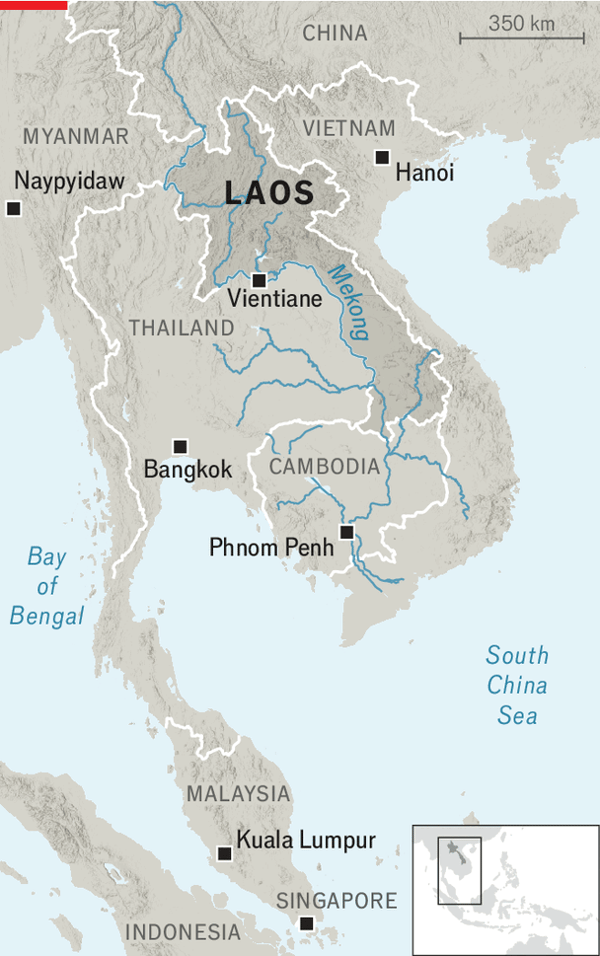
According to the International Energy Agency (IEA), South-East Asia will account for one-fifth of the growth in global electricity demand between now and 2035, trailing only India. To capitalize on this, Laos, a landlocked nation of 8 million people with a per capita income of $2,400, aims to become the "battery of South-East Asia." Since first exporting hydropower to Thailand in 1971, Laos has built over 80 hydro plants with a total capacity of 12GW, which generates 70% of its domestic supply. By 2030, it plans to operate 100 dams and exceed 15GW in capacity. In 2024, electricity exports to six countries earned $2.4 billion, representing nearly one-quarter of total exports.
China plays a pivotal role in this expansion, financing roughly half of Laos's hydropower projects and establishing a new cross-border transmission line. In 2021, Électricité du Laos (EDL) handed a 90% stake in its transmission grid to a China Southern Power Grid subsidiary under a 25-year concession. However, this dam-building boom has pushed Laos's public debt to an estimated 81% of GDP in 2025, up from 53% a decade ago, with half owed to China. Although built under build-operate-transfer agreements, the Lowy Institute notes that Laos will not take ownership of any major project before 2035, while environmentalists warn of collapsed fish stocks and river bank erosion.
Furthermore, Laos's focus on exports has led to domestic neglect. EDL is in the red due to transmission losses, and dry-season water shortages often force Laos to import electricity from Thailand at rates higher than its own export prices. To address this seasonal shortfall, Laos is developing solar power, including a newly opened 1GW solar plant constructed by a Chinese state firm to serve the Chinese market. Although Laos is scheduled to graduate from the UN's list of least-developed countries in November, sustaining long-term economic growth will require the nation to diversify its economy beyond hydropower.
Source: Laos has big dreams of exporting energy
Subtitle: But its dams have flooded it with debt and other problems
Dateline: Jul 09, 2026 05:23 AM | VIENTIANE