过去十年来,全球亿万富翁的财富来源结构发生了显著转变,通过竞争性行业自主创业积累的财富比例升至历史新高。对过去25年中约7,000名亿万富翁的数据分析显示,自2014年以来,来自博彩、房地产、国防和采矿等高度依赖政治资源与寻租的“非竞争性”领域的财富占比持续下降,后苏维埃时代的寡头总财富也从2008年峰值的约5000亿美元降至约4000亿美元。与此同时,继承财富占比从2000年代初的近一半大幅降至约四分之一。
这一“白手起家”趋势在科技以及消费品、餐饮和制造业中尤为突出。全球股市长达十多年、年均回报率超过13%的牛市,为创始人创造了巨大的股权增值空间;此外,中国亿万富翁数量从约200位激增至约800位,以及2010年代中期移动互联网的普及,共同推动了白手起家富豪的快速涌现。例如,宁德时代(CATL)创始人曾毓群在创业15年内积累了600亿美元财富;LVMH创始人贝尔纳·阿尔诺(Bernard Arnault)的财富在过去十年中增长了约1000亿美元。
全球亿万富翁财富结构的转变对富豪税政策的论据构成了冲击。过去针对寡头与不当得利的征税理由在面对白手起家的企业家时说服力下降,因为这一群体直接推动了就业增长与生产力提升,高税率可能带来更大的经济开避与资本流失风险。尽管部分拥有巨大财富的个体(如近期短暂突破万亿美元财富关口的埃隆·马斯克)对政治选举的影响力引发了对民主机制的担忧,但政策解决路径更应聚焦于规范政治捐赠规则,而非简单通过财富税打压创新与价值创造。
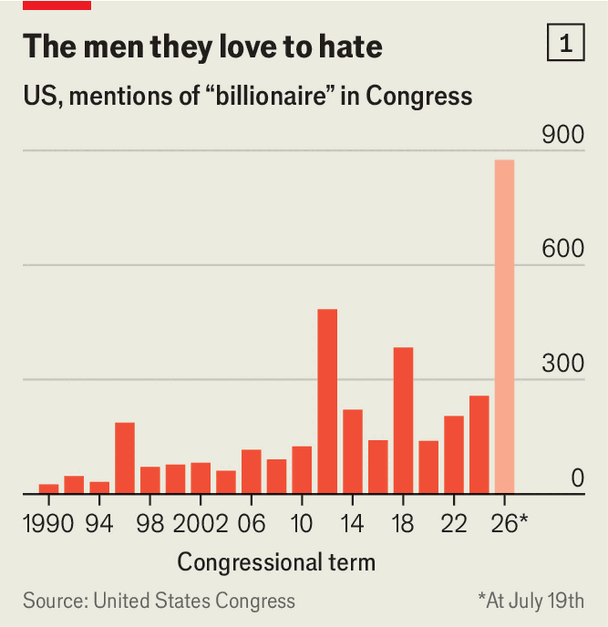
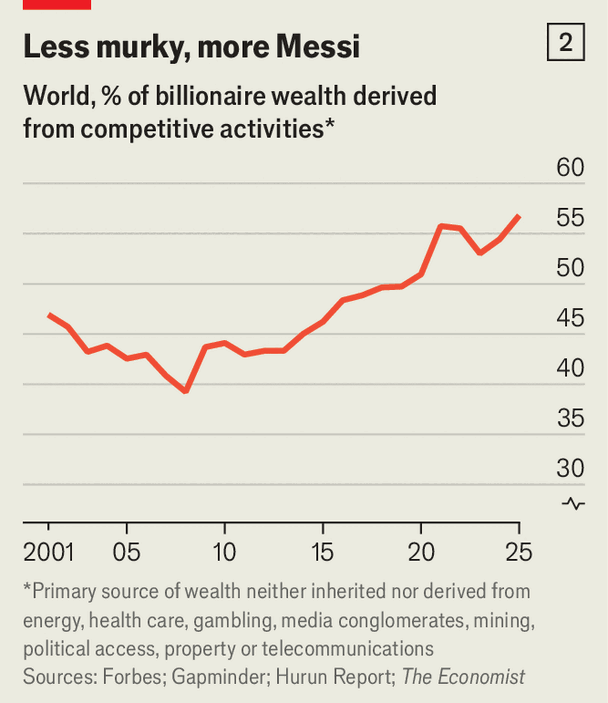
Over the past decade, the compositional structure of global billionaire wealth has shifted, with the share derived from self-made entrepreneurs in competitive sectors reaching an all-time high. Quantitative analysis tracking roughly 7,000 billionaires over the past 25 years demonstrates that wealth generated from "uncompetitive" sectors—such as real estate, gambling, defense, and mining—has contracted since 2014. Total wealth held by post-Soviet oligarchs declined from a 2008 peak of around $500bn to $400bn today, while the proportion of billionaire wealth derived from inheritance fell from nearly 50% in the early 2000s to approximately 25%.
This expansion in self-made wealth spans technology, manufacturing, finance, and consumer services, bolstered by structural economic drivers. A decade-long global bull market yielding average annual equity returns above 13%, the expansion of China's billionaire population from 200 to 800, and the advent of mobile-first digital networks enabled rapid wealth creation. Notable examples include CATL battery-maker founder Robin Zeng, who accumulated $60bn within 15 years, and LVMH founder Bernard Arnault, whose wealth expanded by approximately $100bn over the past decade.
The rising prominence of self-made billionaires alters the policy debate surrounding wealth taxation. Because a larger share of ten-figure fortunes reflects legitimate value creation, productivity gains, and employment growth, imposing punitive wealth taxes risks higher economic deadweight losses and capital flight. While political influence exerted by mega-wealthy individuals—such as Elon Musk, who briefly crossed the 13-figure net-worth threshold—raises concerns regarding democratic processes, addressing these challenges favors reform of campaign finance laws over disincentivizing wealth accumulation.
Source: Today’s billionaires are more likely than yesterday’s to have made their own money
Subtitle: [[IMAGE]]
Dateline: Jul 23rd 2026