在发达国家,食品与杂货价格自2020年以来的大幅上涨引发了广泛的社会关注与政治干预。在美国,食品杂货价格上涨了约四分之一,超越了名义工资增长,导致近三分之二的美国人将其列为主要财务压力来源,这一比例是住房或燃料压力的两倍;澳大利亚、英国、加拿大和法国的食品价格上涨了20%至33%。然而,指责超市“贪婪”并试图实施政府统价或开设国有超市的民粹主义干预措施严重脱离了经济实际。
数据显示,超市零售端的利润率极其微薄,缺乏价格操纵的证据。去年美国克罗格(Kroger)和艾伯森(Albertsons)等大型连锁超市的营业利润率仅为1%,即便是规模最大的沃尔玛(Walmart)利润率也仅为4%;英国、法国、澳大利亚和加拿大超市的利润率同样维持在低位。对比之下,通用磨坊、卡夫亨氏、蒙得利斯与百事可乐等食品制造巨头的平均营业利润率过去十年达到13%。此外,在2020至2025年间,超市零售价格的上涨幅度并未超过出厂批发价格的上涨速度,且绝大多数地区的超市市场在全国层面维持着充分的竞争。
食品杂货价格上涨的真正动因在于上游成本的系统性飙升。受乌克兰冲突及近期中东局势影响,化肥与燃料等关键生产要素价格剧烈波动;同时,移民政策收紧推高了农业劳动力成本。即便曾通过提价保护利润的封装食品巨头,在过去三年中也因消费者转向更便宜的零售商自营品牌而面临利润率下滑。依靠政府干预或开设公共超市并不能解决供应链上游的成本压力,反而可能损害现有竞争性零售生态。
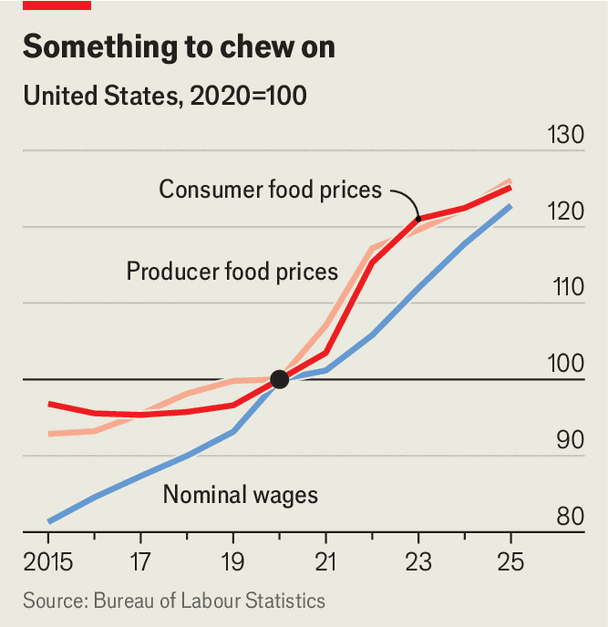
Rising grocery prices across developed economies have created significant consumer stress, prompting misguided political interventions. In the United States, grocery prices have risen by roughly 25% since 2020, outstripping nominal wage growth and leading nearly two-thirds of Americans to rank food costs as a primary source of financial stress—double the share citing housing or fuel. Similar food inflation occurred in Australia, Britain, Canada, and France, where prices jumped between 20% and 33%. In response, politicians have proposed state-run grocery stores or direct price controls, blaming retail gouging.
However, empirical evidence demonstrates that retail grocery profit margins remain exceptionally low, offering no proof of price manipulation. Major American supermarket chains like Kroger and Albertsons generated operating margins of just 1% last year, while Walmart recorded 4%. Margins in European and Commonwealth nations are similarly slim. By contrast, major food manufacturers—including General Mills, Kraft Heinz, Mondelez, and PepsiCo—maintained average operating margins of 13% over the past decade. Furthermore, retail food prices tracked wholesale producer price increases consistently between 2020 and 2025 across major developed markets.
The true drivers of grocery inflation reside further upstream in the food supply chain. Geopolitical conflicts in Ukraine and the Middle East significantly increased costs for essential inputs such as fertilizer and fuel, while restricted immigration policies raised agricultural labor costs. Even packaged-food conglomerates that initially raised prices to insulate margins have experienced margin compression as consumers shifted toward cheaper store-brand alternatives. Government intervention at the retail level fails to address these underlying input costs and risks disrupting competitive food distribution networks.
Source: Saying greedy shops have caused rising food prices is populist nonsense
Subtitle: [[IMAGE]]
Dateline: Jul 23rd 2026