根据联合国粮食及农业组织(FAO)7月21日发布的报告,南美洲是全球消除饥饿进展最快的地区。自2020年以来,该地区热量摄入不足的饥饿人口比例下降了三分之一(33.3%),降至历史最低的3.5%。在各国表现中,巴西已于2025年成功脱离联合国“饥饿地图”(即慢性饥饿率超过2.5%的国家名单),智利和圭亚那也已脱离。阿根廷的饥饿率降至3%以下,哥伦比亚与巴拉圭降至4%,秘鲁和委内瑞拉在5%附近,玻利维亚与厄瓜多尔分别改善至20%和11%。
南美洲减少饥饿的根基在于宏观经济稳定与通货膨胀控制。得益于中央银行早于其他地区采取激进的加息政策,通胀迅速得到遏制。阿根廷月度食品价格通胀率从2023年近30%的峰值大幅放缓至6月份的2%以下,低于工资增长率;玻利维亚的食品通胀年率从去年的33%降至目前的13%左右。同时,哈维尔·米莱总统在阿根廷实现了自2008年以来的首次初级财政盈余,玻利维亚、智利、厄瓜多尔等国的财政紧缩政策也降低了食品账单压力。
社会福利计划的数字化与精准化构成了另一大支柱。巴西著名的现金转移支付项目“家庭包”(Bolsa Família)在博索纳罗任内将平均津贴提高了两倍,目前该项目资金占巴西GDP的1.5%,覆盖了近五分之一(20%)的家庭。然而,挑战依然严峻:气象部门警告即将到来的厄尔尼诺现象为1950年以来仅有的三次“极强”周期之一;同时,儿童超重率和成人肥胖率已分别飙升至近10%和30%的历史新高,且南美洲采购健康饮食的成本高居全球第四。
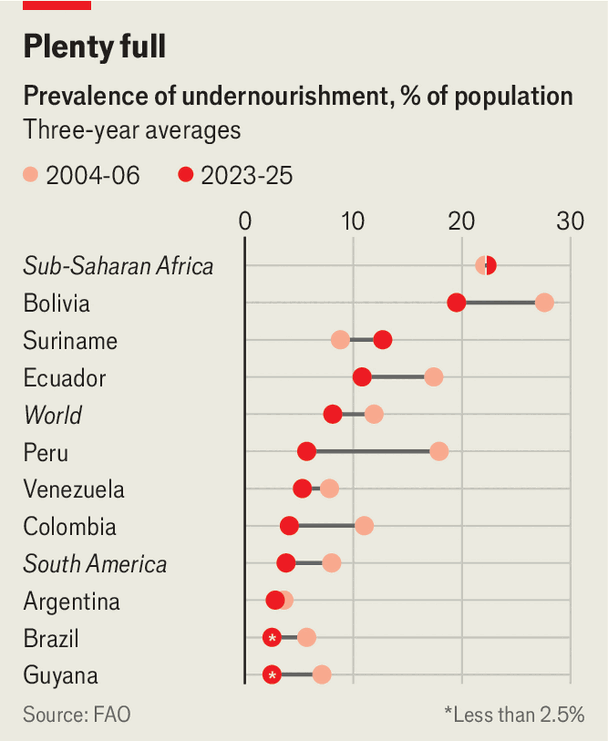
According to a UN Food and Agriculture Organisation (FAO) report published July 21st, South America is leading global efforts in hunger reduction. The region's hungry population share dropped by one-third (33.3%) since 2020 to a record low of 3.5%. By 2025, Brazil, Chile, and Guyana were removed from the UN Hunger Map (tracking nations with chronic hunger above 2.5%). Argentina lowered its rate below 3%, Colombia and Paraguay reached 4%, Peru and Venezuela neared 5%, while Bolivia and Ecuador improved to 20% and 11% respectively.
Macroeconomic stability and effective monetary policy serve as core drivers of this progress. Central banks aggressively raised interest rates during the pandemic, bringing inflation under control faster than elsewhere. In Argentina, monthly food-price inflation decelerated from a peak near 30% in 2023 to under 2% in June, falling below wage growth. Bolivia's annual food inflation slowed from 33% in November to around 13%. Furthermore, fiscal discipline, such as President Javier Milei securing Argentina's first primary surplus since 2008, eased pressure on food costs.
Enhanced social safety nets form the second pillar of hunger reduction across the continent. Brazil's Bolsa Família cash-transfer program, expanded under former President Jair Bolsonaro to triple its average stipend, currently consumes 1.5% of GDP and reaches nearly one-fifth (20%) of households. However, structural risks persist: NOAA predicts a "very strong" El Niño cycle—a top-category phenomenon declared only three times since 1950—while child overweight and adult obesity rates reached record highs of nearly 10% and 30% respectively.
Source: Thank central banks and savvy handouts
Subtitle: [[IMAGE]]
Dateline: Jul 23rd 2026