伊朗战争引发了石油史上最大的供应冲击,导致霍尔木兹海峡每天约1400万桶原油受阻,但全球油价并未如预期突破每桶150美元。除阿联酋和沙特通过替代管道分流500万桶/日以及美日释放创纪录的200万桶/日应急储备外,关键在于中国的决断。今年2月至6月间,中国将原油进口量腰斩,锐减550万桶/日,相当于疫情期间全球需求降幅的一半以上,专家估计此举使布伦特原油价格降低了30美元以上。
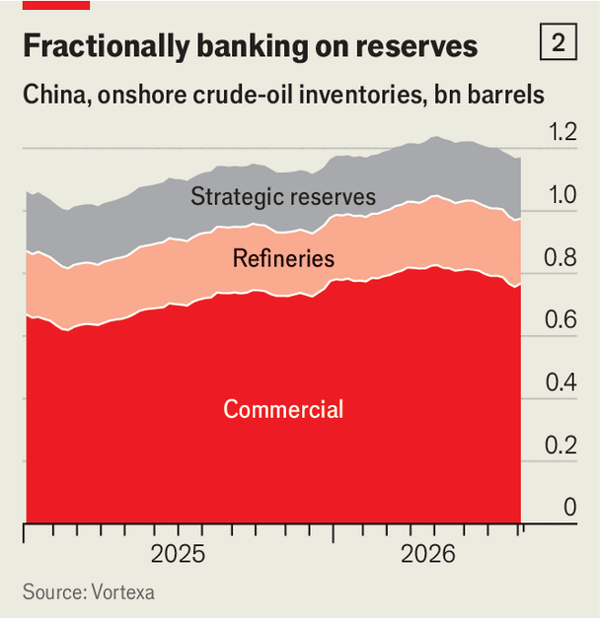
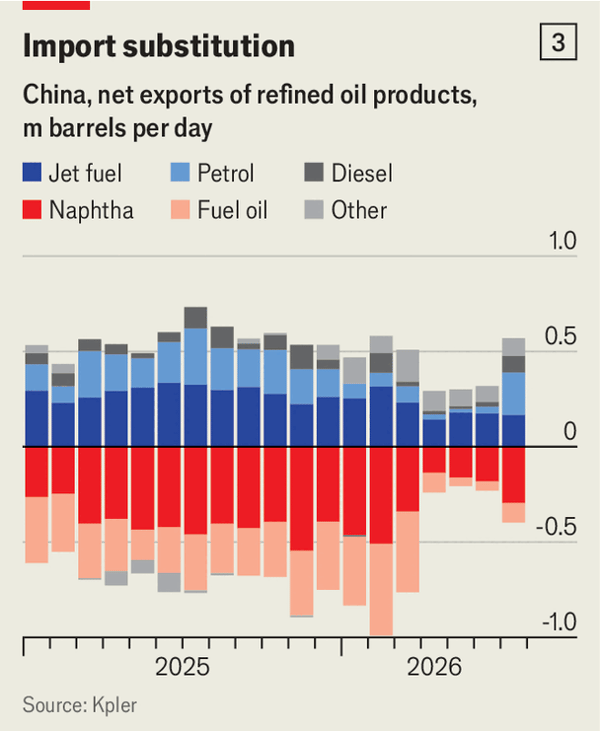
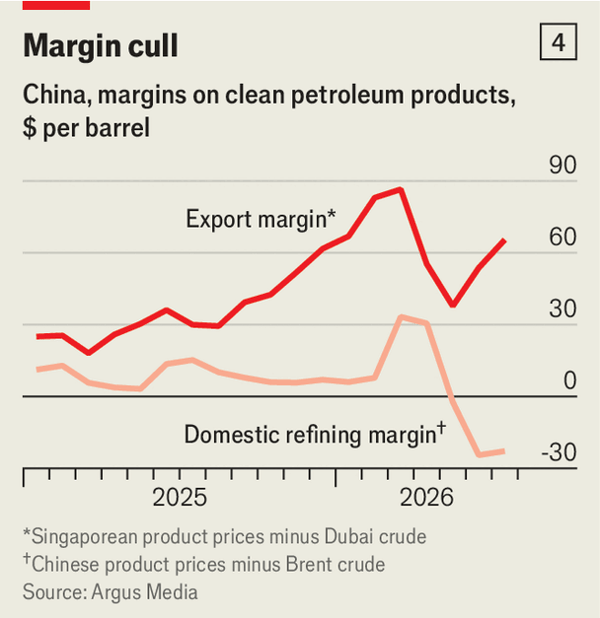
中国主要依靠三大调控杠杆影响石油市场。首先是库存管理:战前中国在原油充裕时逢低吸纳2亿桶,使总储备充实至10亿桶;战后3个月内通过商业和浮动库存动用了1.5亿桶(约150万桶/日),结合停止超额储备,贡献了250万桶/日的进口减量。其次是出口管制:政府限制国内炼油厂出口,使精炼油品出口减半至43万桶/日,节约了120万至180万桶/日的原油加工需求,并将产出留存国内以生产石脑油和液化石油气等关键原料。
第三大杠杆是抑制国内需求:6月份中国炼油厂原油加工量同比减少270万桶/日,汽油产量下降14%,柴油和航空煤油产量均萎缩21%。公众在油价上涨后转向公共交通与电动车(五一假期高速公路充电量激增近55%),化工企业亦转向利用煤炭和乙烷替代海湾原料。凭借庞大的工业库存、绿能替代与战略储备缓冲,中国在二季度实现4.3%的GDP增速,并展现出单凭一己之力数月内稳定全球油市的强大市场定价权。
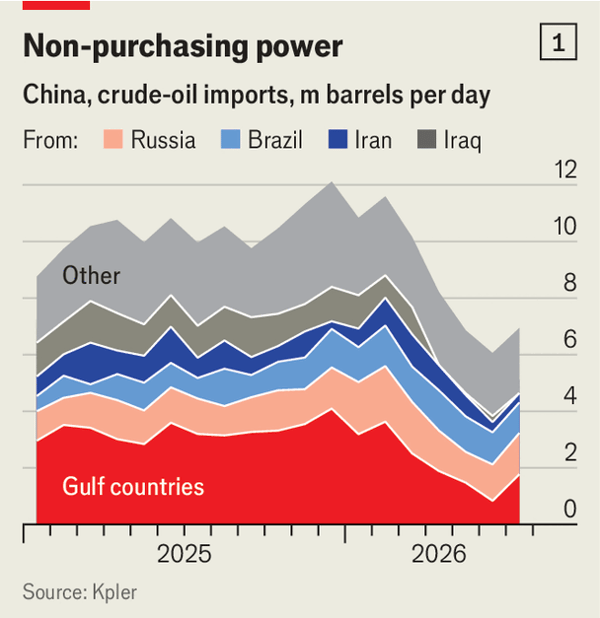
The war in Iran triggered the largest supply shock in petroleum history, trapping 14 million barrels per day (b/d) in the Persian Gulf; however, global oil prices remained below the projected $150 per barrel. Alongside rerouting efforts of 5 million b/d by Saudi Arabia and the UAE and a record 2 million b/d release of emergency stocks by the United States and Japan, China played the decisive role. Between February and June, China slashed crude imports by half—a reduction of 5.5 million b/d, representing more than half of the pandemic-era global collapse—effectively shaving $30 or more off Brent benchmark prices.
China exercised unprecedented market power through three primary levers. First, sophisticated inventory management allowed it to tap 150 million barrels over three months (about 1.5 million b/d) from brimming reserves that had previously reached 1 billion barrels, while halting 1 million b/d in discretionary stockpiling, thus accounting for 2.5 million b/d of the import drop. Second, aggressive export restrictions halved refined product exports to 430,000 b/d—including a 180,000 b/d drop in jet fuel—saving refineries 1.2 million to 1.8 million b/d of crude to prioritize domestic petrochemical feedstocks.
Third, central authorities curbed domestic demand, reducing June crude processing by 2.7 million b/d year-on-year, with petrol output falling 14% and both diesel and jet fuel contracting by 21%. Urban commuters substituted road travel with public transit and electric vehicles—reflected in a 55% surge in motorway EV charging during the May holidays—while petrochemical producers pivoted to coal and ethane. Supported by green energy infrastructure and extensive pre-existing polymer inventories, China sustained 4.3% GDP growth in the second quarter while demonstrating unmatched unilateral capacity to stabilize global energy markets.
Source: China is now the world’s great oil power
Subtitle: Forget OPEC. The Chinese Communist Party calls the shots
Dateline: 8月 13, 2026 04:18 上午