尽管苏格兰在过去五年中额外投入了2.5亿英镑(约合3.36亿美元)以扭转局势,但仍连续第七年被列为欧洲毒品致死率最高地区。虽然2024年1017例的滥用药物死亡人数曾创下2017年以来的新低,但去年该数字再度反弹约8%。针对将重心置于“减害”而非彻底治愈的批评,支持者指出应急减害措施不可或缺:警察随身携带纳洛酮以防止街头用药过量,格拉斯哥去年启动的全英首个为期三年的受监督吸毒室试点已成功挽救了约200条因过量吸毒而濒死的生命,并提供医疗体检等综合服务。
目前全苏格兰约有4.4万人患有阿片类药物依赖,但在死亡率最高的格拉斯哥,公立资助的戒毒床位仅有23张,使得不堪重负的医疗人员只能应对紧急病例。短期昂贵的排毒治疗极易导致复吸,许多戒毒人员需要长达数年的长期社区康复才能实现深层治愈。此外,贫困加剧了物质滥用风险,社交媒体的普及使毒品交易能直接送货上门,进一步扩大了成瘾风险群体的接触渠道。
更严峻的是,新型合成毒品的致死性急剧上升,苏格兰普遍存在多药混用的现象。效力最高可达芬太尼500倍的合成阿片类药物“尼塔秦”(nitazenes)已被掺入售价低至50便士的苯二氮䓬类药片中,警方去年甚至在苏格兰西部查获了全英首个尼塔秦制造实验室。毒品危害每年给苏格兰造成约60亿英镑的经济损失,扩大长期戒毒康复咖啡馆及专业戒毒基础设施投资,不仅体现人道关怀,更是极具经济效益的根本之策。
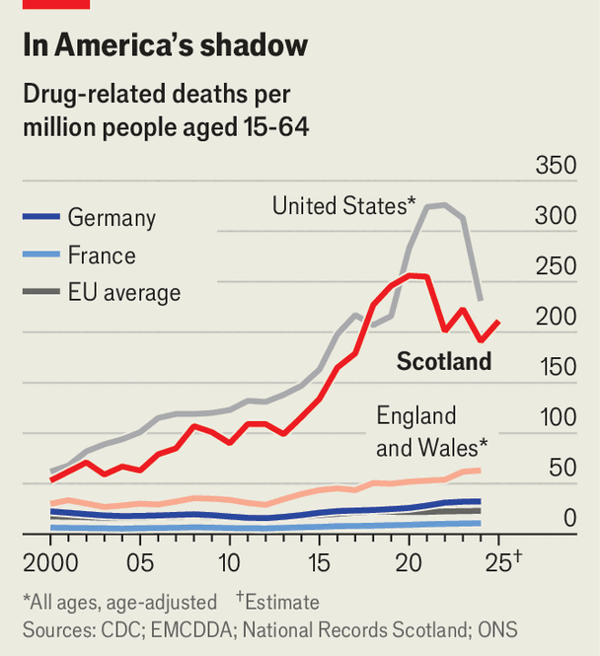
Despite allocating an extra £250m ($336m) over five years to eradicate its crisis, Scotland remains Europe's drug-death capital for the seventh consecutive year. Although drug-misuse fatalities dropped to 1,017 in 2024, the lowest tally since 2017, deaths climbed again by approximately 8% last year. While critics argue harm-reduction frameworks manage addiction rather than cure it, interventions remain vital: police carry naloxone, and Glasgow’s inaugural three-year pilot drug-consumption room—among roughly 200 globally—has averted about 200 overdose deaths while providing clinical testing and social service referrals.
Treatment infrastructure suffers from severe structural shortages; roughly 44,000 Scots experience opioid dependence, yet Glasgow, the epicentre of drug fatalities, possesses merely 23 publicly funded rehabilitation beds. High costs and brief detoxification stays frequently induce relapse, driving individuals to seek lengthy residential community recovery programmes abroad to achieve lasting sobriety. Socio-economic deprivation exacerbates vulnerability among the poorest demographics, while modern digital platforms and social media have streamlined logistics, enabling direct home delivery of illicit chemical highs without conventional street encounters.
The epidemiological crisis is further compounded by poly-drug cocktails and high-potency synthetic opioids, notably nitazenes, which can be up to 500 times stronger than fentanyl. These lethal compounds have infiltrated black-market benzodiazepines selling for as little as 50 pence per pill, culminating in police discovering Britain's first illicit nitazene laboratory in west Scotland. With substance abuse costing the Scottish economy roughly £6bn annually, expanding peer-led recovery cafés and sustainable long-term rehabilitation infrastructure offers both a compassionate and economically sound strategy to curb casualties.
Source: How to fix Scotland’s drugs disaster
Subtitle: Efforts to get Scots off drugs need to be stepped up
Dateline: 8月 13, 2026 03:44 上午 | Glasgow