马来西亚南部柔佛州正掀起全球最狂热的数据中心建设浪潮之一。得益于低廉地价、稳定的电力供应与友好的招商政策,柔佛州的数据中心容量在过去五年内激增110倍(此前仅为10兆瓦),推动马来西亚全国数据中心容量预计在2030年达到约7.7吉瓦。汇丰银行数据显示,数据中心相关投资已占马来西亚国内生产总值(GDP)的18%,这一比重高居全球首位。
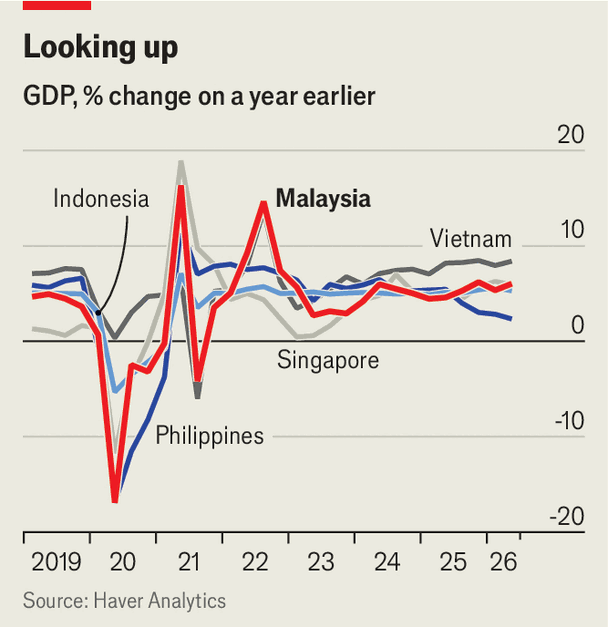
这场基建热潮对马来西亚宏观经济产生了立竿见影的拉动效应。受数据中心建设与制造业驱动,该国第二季度GDP同比增速由一季度的5.4%攀升至6%。长期深耕半导体封测领域的传统优势,使马来西亚迅速切入全球人工智能硬件供应链。此外,中美地缘政治博弈催生的“中国加一”战略,促使跨国企业将产能大举迁往大马,7月对美出口同比暴增80%,中美两国科技巨头亦同时竞相在当地注资兴建算力基础设施。
然而,马来西亚若想借此跨越“中等收入陷阱”,仍需克服严峻挑战。目前大马多数数据中心仅作为承载服务器的机房,缺乏芯片设计或大模型训练等高附加值前沿研发;为此,政府正收紧审批门槛,明确提出到2030年跻身全球AI前十强的目标,倒逼外企提供高技能岗位并扶持本地供应链。此外,区域发展失衡依然显著,吉隆坡人均GDP约是北部吉兰丹州的八倍,工资增速也落后于通胀。标普全球预计,数据中心用电负荷占全国发电总量的比重将从目前的7%飙升至2035年的近31%,引发对水资源消耗与电网承载力的担忧。不过,得益于亮眼的经济增长,柔佛州执政联盟在7月州选中以更大优势胜选,算力热潮带来的政治红利依然显著。
Malaysia is experiencing an unprecedented expansion in data-centre infrastructure, concentrated heavily in the southern state of Johor. Driven by affordable land, dependable energy infrastructure, and pro-business incentives, Johor's data-centre capacity expanded 110-fold over the past five years from an initial base of 10MW. Nationwide, capacity is projected to reach approximately 7.7GW by 2030. According to HSBC, capital expenditure on data centres currently accounts for 18% of Malaysia's gross domestic product—the highest proportion anywhere in the world.
This capital influx has provided a major boost to macroeconomic performance. Real GDP accelerated to 6% year-on-year growth in the second quarter, up from 5.4% in the first quarter, propelled by construction and industrial output. Decades of experience in semiconductor assembly and testing have positioned Malaysia as a pivotal intermediary within the artificial intelligence hardware supply chain. Benefiting from geopolitical hedging under "China-plus-one" realignments, exports to the United States surged by 80% year on year in July, with hyperscalers from both the US and China investing heavily across the peninsula.
To escape the middle-income trap, Malaysia is striving to ascend the AI value chain beyond hosting server hardware, which currently involves minimal advanced model training or semiconductor architecture design. The government has established a target to rank among the world's top ten AI nations by 2030, adopting stringent criteria that demand foreign operators generate high-skilled engineering employment, fund research, and integrate domestic vendors. Substantial structural obstacles persist: regional income disparities remain wide, with per capita GDP in Kuala Lumpur eight times higher than in rural Kelantan, while domestic wage gains lag cost-of-living increases. Furthermore, S&P Global projects data-centre electricity consumption could rise from roughly 7% of available power today to nearly 31% by 2035, escalating strain on water and grid resources. Nonetheless, unlike in Western economies, domestic public backlash remains contained, as evidenced by Johor’s ruling coalition securing an expanded electoral majority in July on the back of strong economic growth.
Source: Malaysia is enjoying a massive data-centre boom
Subtitle: Could it help the country escape its middle-income trap?
Dateline: Sep 10th 2026