这种情绪反映了从疫情后「及时行乐」经济向更谨慎理财的转变。消费者在每一笔开销中都在权衡机会成本,担心这笔钱是否更应该用于偿还债务、建立紧急基金或为退休储蓄。高达 70% 的受访者表示,要在财务责任与享受生活之间取得平衡让他们感到充满压力。
为了应对这种内心的天人交战,许多美国人选择减少或延迟开支,甚至放弃参与昂贵的活动。不过,仍有超过三分之二的人每月至少会花钱买快乐。一些人透过每月设立专属的「玩乐基金」,成功在延迟满足与及时行乐间找到平衡,减少了消费时的罪恶感。
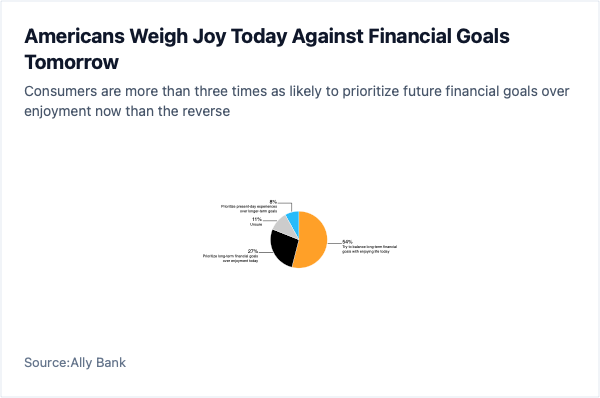
According to a report by Ally Bank, nearly three-quarters of US adults experience guilt when spending money on things that bring them joy rather than putting it toward financial goals. Even though many feel their leisure spending is appropriate, economic pressures like inflation, high housing costs, and uncertainty turn even modest indulgences into sources of internal conflict and unease.
This sentiment marks a significant shift from the post-pandemic "YOLO" economy, pointing toward a more cautious financial mindset. Consumers are constantly weighing the opportunity cost of their expenses, worrying if the money should have been used to pay down debt, build emergency funds, or save for retirement. Around 70% of respondents report feeling stressed about balancing their financial responsibilities with enjoying life.
To cope with this internal struggle, many Americans are cutting back, delaying expenses, or forgoing costly activities altogether. Nevertheless, over two-thirds still spend money on things that bring them joy at least monthly. Some have found a balance by setting aside a dedicated "fun money" budget each month, allowing them to enjoy life while minimizing spending guilt.