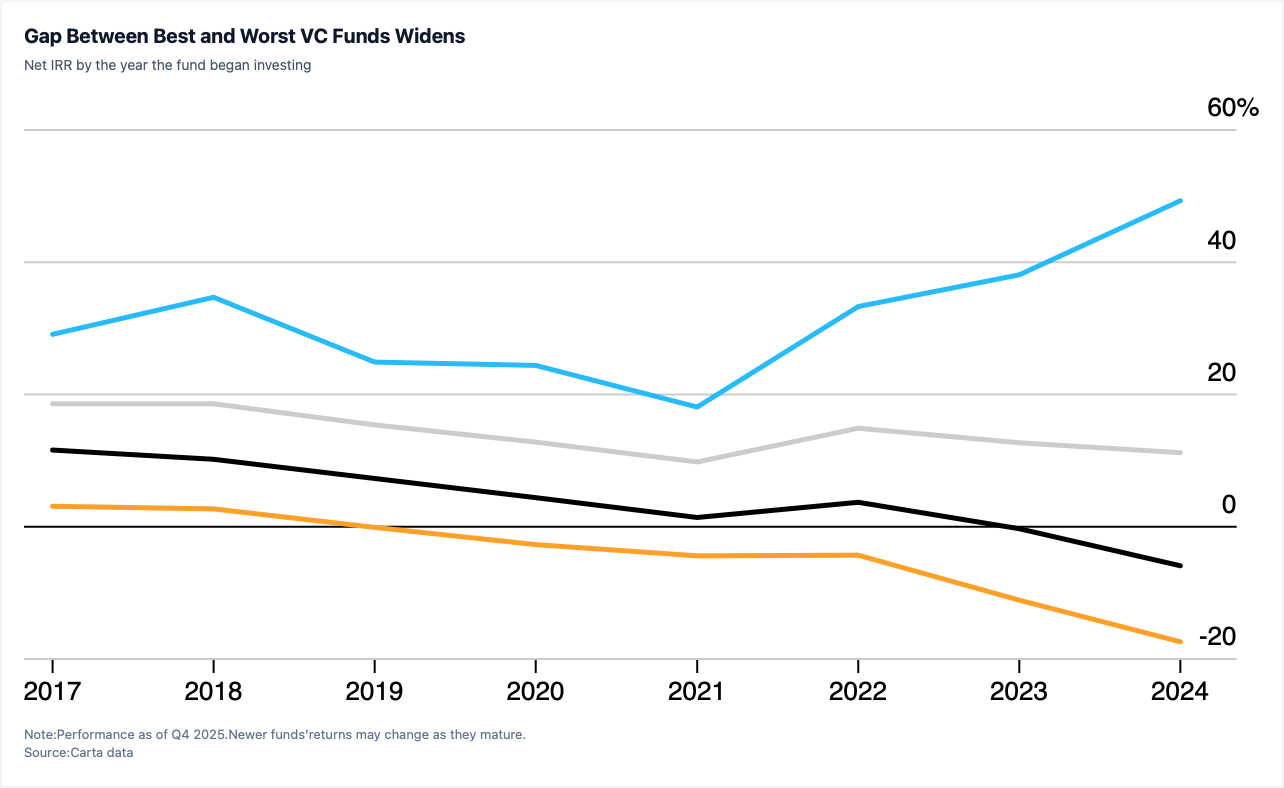
人工智慧的热潮进一步扭曲了风险投资市场,绝大部分资金流向了支持顶级人工智慧企业的少数顶尖投资者。这种资源集中的现象让新兴或规模较小的基金难以在种子轮竞争中脱颖而出,导致他们的募资总额较疫情高峰期大幅下降,同时也让表现最佳与最差的基金之间的绩效差距显著扩大。
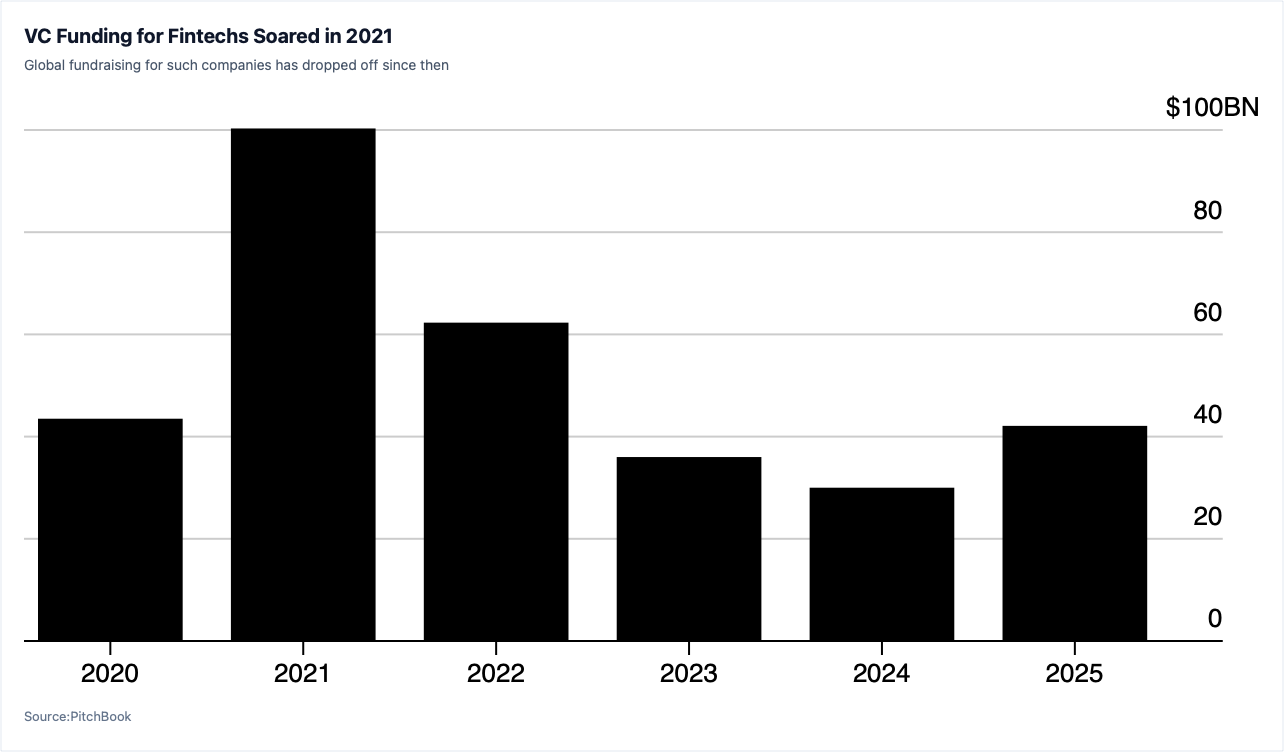
受到市场重心转移的影响,过去五年在企业软体和金融科技领域获得极高估值的新创公司,如今却面临退出选项有限的困境,被业界称为缺乏成长动能的「僵尸独角兽」。由于买家变得更加挑剔且首次公开募股之路更为艰难,这些曾经辉煌的企业现在只能被迫接受估值缩水,或是勉强维持营运直到被折价收购。(关键数字: five years)
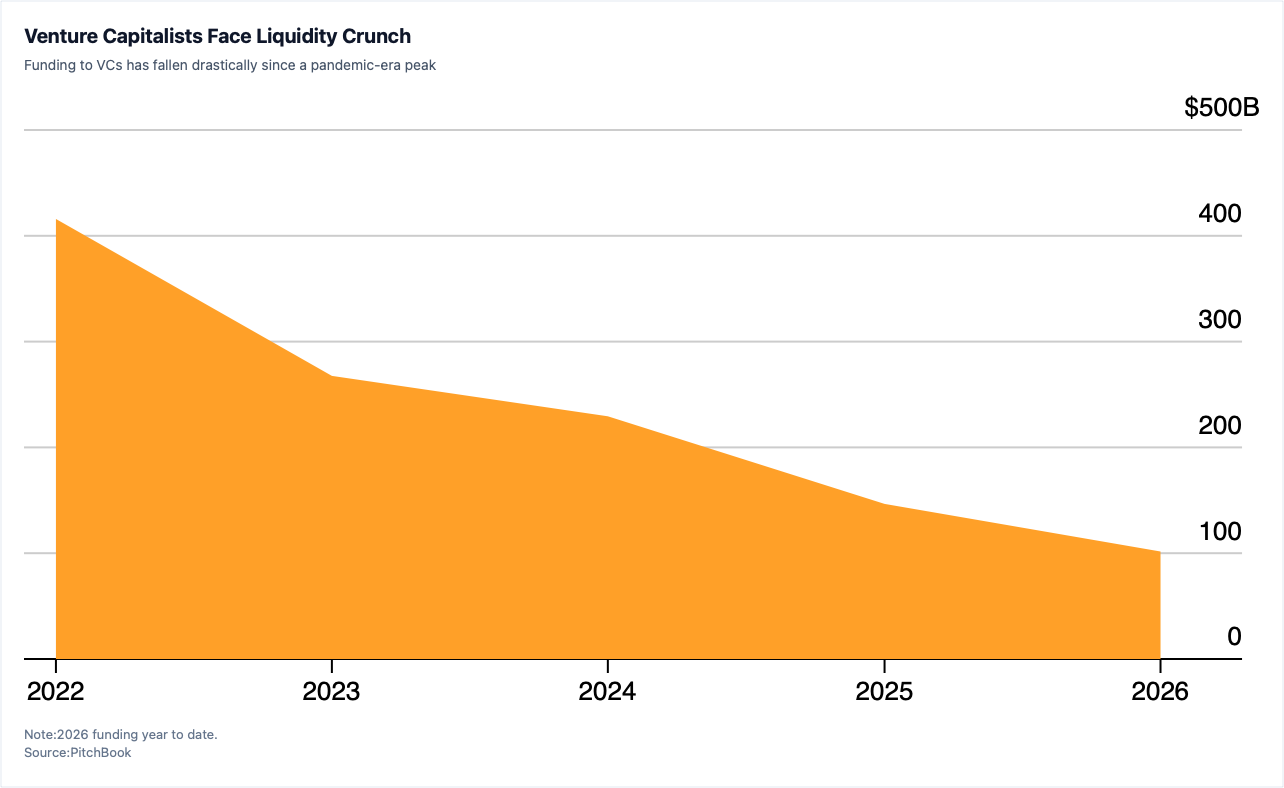
Venture capital firms are facing severe challenges in raising new funds as investors strongly demand liquidity and returns from previous funds before committing new capital. This puts immense pressure on smaller and sector-focused venture managers, forcing some major European investors to shelve billion-dollar growth fund plans in favor of smaller targets or extended investment periods.
The artificial intelligence boom has further warped the venture capital market, with the vast majority of money flowing to a handful of top-tier investors backing major AI companies. This concentration of resources makes it exceedingly difficult for smaller and emerging funds to compete in seed rounds, resulting in a drastic drop in their fundraising compared to pandemic peaks and widening the performance gap between the best and worst funds.
Driven by this market shift, startups in enterprise software and fintech that achieved massive valuations over the past five years now face limited exit options, becoming known as "zombiecorns" lacking the growth to support their worth. With buyers becoming increasingly selective and the path to an IPO toughening, these once-prominent companies are forced to accept lower valuations or limp along until acquired at a discount.