预测市场平台Kalshi与Polymarket正致力于从面向散户小额交易的模式转向吸引华尔街机构投资者。2025年6月,Kalshi处理了330亿美元的交易,Polymarket在其国际加密平台和美国合规平台分别处理了107亿美元和33亿美元。然而,要吸引大型对冲基金与资产管理公司进行大额交易,平台必须建立完善的机构级基础设施。近期,Kalshi完成了首笔针对碳许可拍卖的定制化大宗交易,并推出了可实时监控2,000个市场的Pro专业级终端,以推进平台向成熟的金融交易所靠拢。
要真正打动华尔街机构,解决监管不确定性、防止内幕交易以及提供资本效率至关重要。预测市场近年多次曝出内幕交易丑闻(如网红雇员及政治候选人押注自身事件),严重破坏了市场公平性;同时,交易结算规则的争议也频频引发诉讼。此外,机构投资者最核心的需求在于保证金交易(杠杆)与资本效率。由于大多数交易要求全额资金预付,导致在政治大选或地缘政治等长周期事件上的资金被长期冻结,极大限制了机构资金的参与积极性。
尽管Kalshi于今年3月获得了提供保证金交易的监管批准,但专业机构在预测市场中盈利依然面临独特挑战。预测市场本质上是零和博弈,机构投资者面对的并非无知的散户,而是许多在特定领域深谙规则的匿名“巨鲸”交易者。正如Susquehanna投资75名交易员进行预测市场套利后所感叹的那样,预测市场的博弈极具谦卑性,专业机构并不总是能够战胜市场共识。
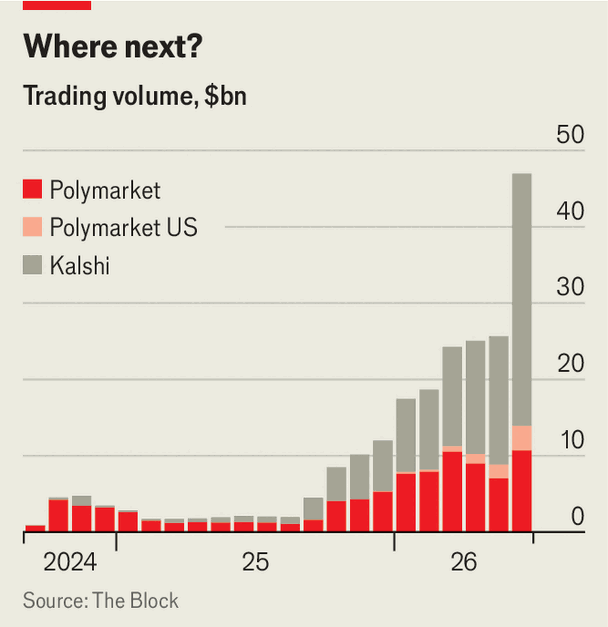
Prediction markets such as Kalshi and Polymarket are transitioning from retail platforms to institutional-grade financial exchanges designed for Wall Street. In June 2025, Kalshi recorded $33bn in trading volume, while Polymarket handled $10.7bn on its offshore crypto platform and $3.3bn on its regulated US exchange. To attract institutional asset managers, platforms are developing tailored infrastructure: Kalshi executed its first customized off-exchange block trade for carbon credits and launched Kalshi Pro, a professional-grade terminal capable of monitoring 2,000 live markets simultaneously.
Attracting institutional capital requires resolving systemic issues surrounding market fairness, regulatory clarity, and capital efficiency. Market manipulation and insider trading—such as employees betting on private information—undermine market integrity, while ambiguous resolution rules have led to user litigation. Crucially, institutional investors require margin trading and leverage to maximize capital efficiency. Because current platforms primarily require 100% upfront collateral, capital remains locked for months on long-dated geopolitical or election contracts, discouraging large-scale allocation.
Although Kalshi secured regulatory authorization for margin trading in March, institutional success in prediction markets is far from guaranteed. As peer-to-peer zero-sum markets, institutional trading desks frequently compete against highly sophisticated amateur traders and specialized "whales". As Susquehanna founder Jeff Yass noted after deploying a 75-trader team into prediction markets, institutional capital does not automatically enjoy an edge over collective crowd intelligence.
Source: Clearing the regulatory hurdles is only half the battle
Subtitle: [[IMAGE]]
Dateline: Jul 23rd 2026