长期以来被视为无风险避风港的发达国家主权债券正面临前所未有的偿债危机。自2000年以来,美英两国的政府债务净额占GDP比重已翻了三倍,法国和日本也翻了一番,除了战争与经济萧条期外,富裕世界的财政赤字从未如此庞大。随着9月16日美联储加息使其成为年内第五家收紧货币政策的主要央行,十年期美债收益率突破5%大关,创下二十年来罕见的高位;法国国债利差逼近欧债危机水平,沉寂数十年的日本国债收益率亦在飙升。若以当前五年期收益率全额再融资,美国仅维持债务占GDP比例不上升就需削减开支或增税达GDP的4.7%(较一年前的2.3%翻倍),英国需2.7%,法国则从3.1%升至3.9%。
财政风险正因债务结构短期化而加速传导。为降低发债成本并迎合确定给付型养老基金规模缩水后的市场需求,各国政府大举转向短期债务,使高利率迅速侵蚀预算空间。尽管瑞士凭借审慎财政维持着低通胀与低利率,瑞典曾在1990年代成功化解高达11%的财政赤字,甚至希腊今夏发债收益率已低于法国,但主流西方大国的政治生态却背道而驰。面对2027年法国大选、2028年美国大选以及2029年英德大选,各派政客竞相开出巨额财政支票,例如唐纳德·特朗普承诺若共和党赢得中期选举将直接向民众发放5,000美元现金奖励。
寄望于人工智能繁荣驱动超高生产率增长以奇迹般化解赤字纯属幻想,因为过高增长同样会推高利率。主要负债国中仅经历过特拉斯危机的英国提出了部分紧缩计划,而其他政府很可能重蹈覆辙;美国财长斯科特·贝森特自8月起直接干预国债市场以压低收益率的徒劳举动,凸显了财政手段的捉襟见肘。一旦经济陷入衰退,若国债收益率未能如往常般大幅下跌(正如1970年代发达经济体及新兴市场所经历的),失业率上升带来的税收锐减与高昂利息成本将形成致命共振,使昔日的避险天堂沦为金融风暴策源地。
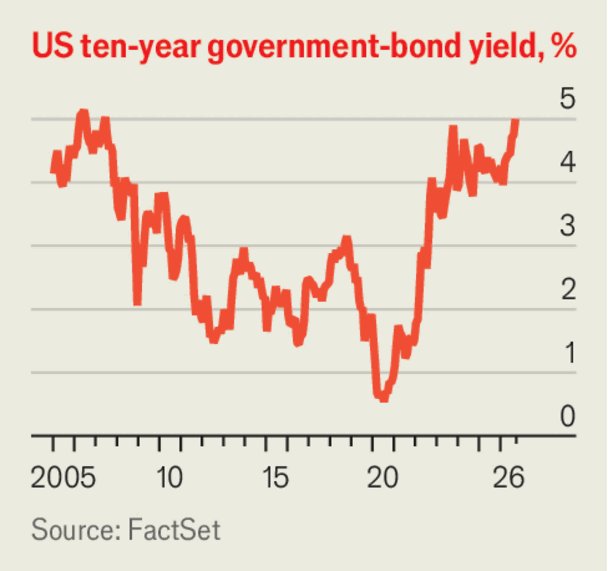
Sovereign bonds across advanced economies, long treated as ironclad havens, are facing an unprecedented fiscal reckoning as public liabilities surge. Since 2000, net public debt as a share of GDP has tripled in America and Britain and doubled in France and Japan, driving peacetime budget deficits to historic extremes. After the Federal Reserve raised interest rates on September 16th—becoming the fifth major central bank in the rich world to tighten policy this year—the ten-year US Treasury yield vaulted past 5%, crossing a threshold unseen for two decades; French bond spreads are approaching euro-crisis highs and Japanese yields are surging. If existing debt were refinanced at prevailing five-year yields, America would require spending cuts or tax hikes worth 4.7% of GDP merely to stabilize its debt ratio (up from 2.3% last October), Britain needs 2.7%, and France requires 3.9%, up from 3.1%.
This vulnerability is intensified by a perilous shift toward shorter-term sovereign issuance. To lower nominal borrowing costs and accommodate dwindling demand from shrinking defined-benefit pension funds, governments have shortened debt maturities, ensuring higher yields feed swiftly into state budgets. While Switzerland manages aging with low debt and modest yields, Sweden eliminated 11% deficits in the 1990s, and Greece recently issued bonds at lower yields than France, major Western democracies are pursuing reckless fiscal laxity. Looming electoral contests—France in 2027, America in 2028, and Britain and Germany in 2029—incentivize reckless pledges, exemplified by Donald Trump’s proposal to disburse $5,000 stimulus checks if Republicans retain Congress.
Relying on an artificial intelligence boom to generate unprecedented productivity growth and painlessly eliminate deficits is deeply unrealistic, as rapid expansion would itself push rates higher. Among major debtors, only post-Truss Britain retains a disciplined tightening roadmap; other nations risk severe market revolts, prompting counterproductive interventions such as US Treasury Secretary Scott Bessent’s futile attempts to cap market yields since August. If a recession strikes and yields fail to drop significantly—mirroring the rich world during the 1970s and emerging markets generally—shrinking revenues and crushing interest burdens will transform sovereign bond markets from safe ports into epicenters of financial turbulence.
Source: Markets are waking up to the rich world’s reckless borrowing
Subtitle: Governments are still, alas, asleep
Dateline: Sep 17th 2026\n