然而,科技带来的便利性也引发了赏鸟爱好者的反思。过度依赖应用程式可能使数位工具成为拐杖,剥夺了赏鸟者亲自追踪、聆听并建立深刻记忆的乐趣,且游戏化的纪录排行榜容易让人偏离沉浸自然的初衷。认知心理学专家指出,「合宜难度」是深化学习的关键;当应用程式立即给出答案时,使用者往往会将操作的流畅感误认为真正的专业知识,反而忽略了长时间累积观察经验的重要性。
此外,资深赏鸟者与专家强调,Merlin 等 AI 工具并非万无一失,常因声图相似、幼鸟叫声或异常鸣叫而出现误判。面对气候变迁与栖地改变导致的鸟类分布转移,实地观察与经验判断依然不可或缺。更重要的是,这些 AI 工具的训练资料源自全球赏鸟者的实地回传;若新一代赏鸟者放弃培养自身的辨识技能,不仅会使个人技能停滞,也将限制演算法未来的进步,唯有在科技辅助与自主探索间取得平衡,才能真正体会赏鸟的深层价值。
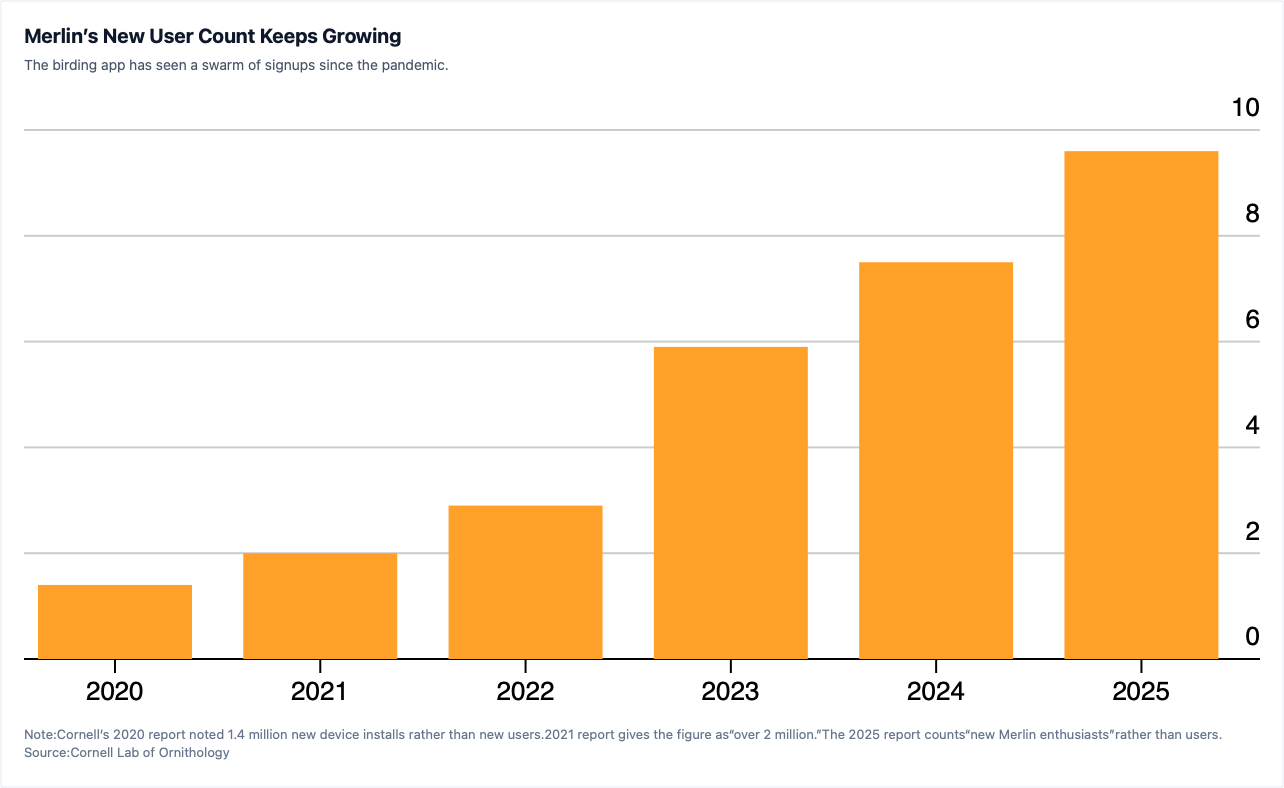
Since the pandemic, birdwatching has experienced a massive boom as people seek outdoor connection and community. This resurgence has spurred rapid technological innovation, most notably seen in the Cornell Lab of Ornithology's Merlin app, which added 9.6 million new users in 2025 alone. The app's Sound ID feature, launched in 2021, allows users to instantly identify bird calls across nearly 2,500 species via GPS-linked acoustic analysis, drastically lowering the barrier to entry for beginners.
Nevertheless, the convenience of technology has sparked concern among birders who worry that apps may become a cognitive crutch, detracting from the visceral experience of tracking birds in the wild. Gamified listing features and quantified leaderboards risk disrupting the traditional flow state of nature observation. Cognitive psychologists note that learning relies on 'desirable difficulty'; when apps provide immediate answers, users often mistake digital fluency for genuine expertise, preventing the formation of deep, lasting recall.
Experienced naturalists also highlight that Merlin is far from infallible, frequently misidentifying calls that have similar spectrograms or failing to catch juvenile and outlier vocalizations. Because shifting ranges and hybridization require ground-truth human observation, app reliance cannot replace field experience. Moreover, since tools like Merlin depend directly on data supplied by human birders, maintaining a balance between leveraging digital aids and cultivating personal expertise is essential for both the birder's growth and the algorithm's future accuracy.