由于人们越来越担心碳定价对工业竞争力的影响,预计欧盟将于7月17日放宽其排放交易体系(ETS)。该排放交易体系对发电、重工业和航空业的碳排放进行定价,在2024年为欧盟及其成员国带来了约400亿欧元(合460亿美元)的拍卖收入。然而,碳成本的上升使该体系成为政治替罪羊,导致包括意大利、波兰和罗马尼亚在内的十个成员国,以及德国总理弗里德里希·默茨,共同倡导对该政策进行审查或推迟。
目前碳价格约为每吨80欧元,这使每千瓦时发电成本增加了约3分钱(约占零售电价的10%),并使三小时飞行的机票价格增加了11欧元。虽然欧盟新的碳边境调节机制(CBAM)通过对钢铁和化肥等碳密集型进口商品征税来保护国内市场,但国际贸易规则规定,随着CBAM的实施,欧盟必须在2034年之前逐步取消其免费配额。这一转变对欧盟出口商极为不利,因为他们在外部市场竞争时将独自承担这些碳成本,这促使人们提出了绿色出口信贷或与可持续投资挂钩的有条件免费配额等建议。
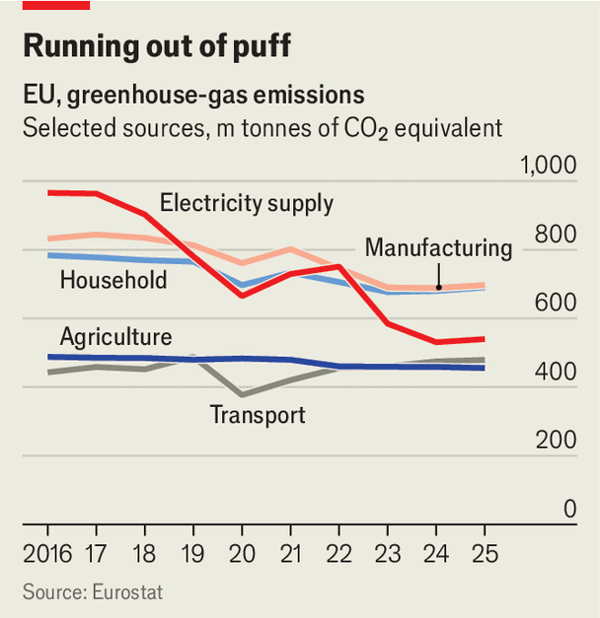
归根结底,实现欧盟的气候目标需要减少发放的碳配额数量,这自然会推高价格。然而,将这一减排负担转移到家庭取暖、农业和运输等政治敏感行业是极具挑战性的。此外,调整规则以迎合污染企业,可能会使那些在碳定价系统保持稳定的假设下已经对绿色技术进行巨额投资的公司处于不利地位。
The European Union is expected to water down its emissions-trading scheme (ETS) on July 17th due to mounting concerns over its impact on industrial competitiveness. The ETS, which prices carbon emissions for power generation, heavy industry, and aviation, generated approximately €40 billion ($46 billion) in auction revenues for the EU and its members in 2024. However, rising carbon costs have turned the system into a political scapegoat, leading ten member states, including Italy, Poland, and Romania, along with German Chancellor Friedrich Merz, to advocate for a review or postponement of the policy.
The carbon price currently stands at approximately €80 per tonne, adding roughly three cents per kilowatt-hour (around 10% to retail electricity rates) and €11 to the price of a three-hour flight. While the EU’s new Carbon Border Adjustment Mechanism (CBAM) protects the domestic market by taxing carbon-intensive imports like steel and fertilizer, international trade rules dictate that the EU must phase out its free allowances by 2034 as CBAM is implemented. This transition poses a significant disadvantage for EU exporters, who will face these carbon costs alone when competing in external markets, prompting proposals for green export credits or conditional free allowances linked to sustainable investment.
Ultimately, meeting the EU’s climate targets requires a reduction in the number of carbon allowances issued, which will naturally drive up prices. However, shifting this emission-reduction burden to politically sensitive sectors like domestic heating, agriculture, and transportation is highly challenging. Furthermore, tweaking the rules to accommodate polluters risks disadvantaging companies that have already invested heavily in greener technologies under the assumption that the carbon-pricing system would remain stable.
Source: Europe seems set to ease its carbon pricing
Subtitle: Green goals are running into fears about competitiveness
Dateline: Jul 16, 2026 05:07 AM