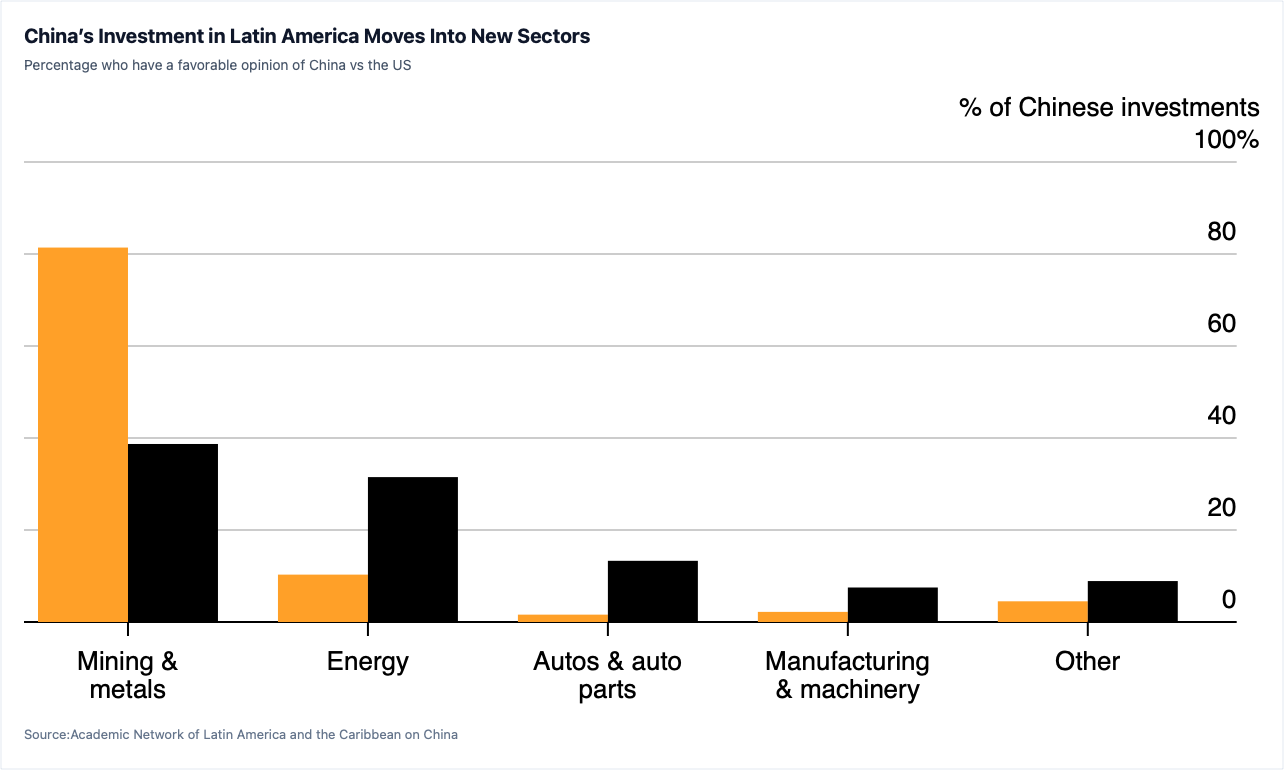
面对美国的政治压力,中国并未退出拉美市场,而是转向更谨慎且具适应性的投资策略,将重心从受瞩目的政府基础建设转移至私营部门与关键矿产等领域。此外,中国也积极布局电池、金融服务以及消费市场,透过电动车品牌与电子商务平台的强力行销,深入当地民众的日常生活。
拉丁美洲国家在美中角力之间面临著艰难的平衡。对拉美各国而言,经济现实往往凌驾于意识形态之上,若被迫切断与中国的经济联系,将承受无法负荷的巨大成本,因此他们必须在维护国家利益的前提下,谨慎地在两大强权之间寻求平衡。
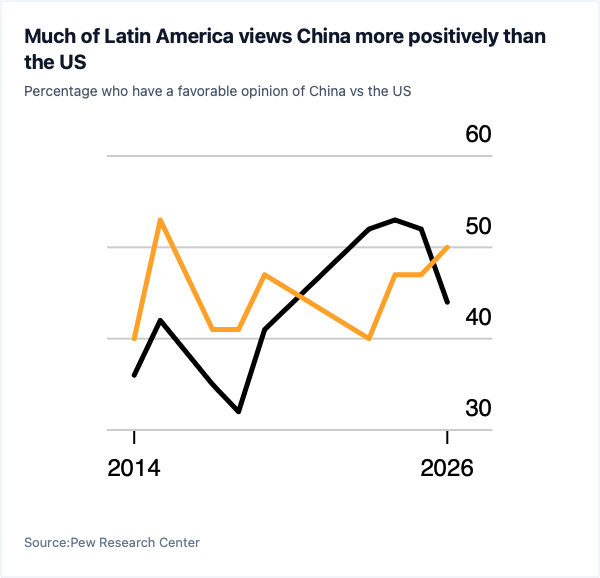
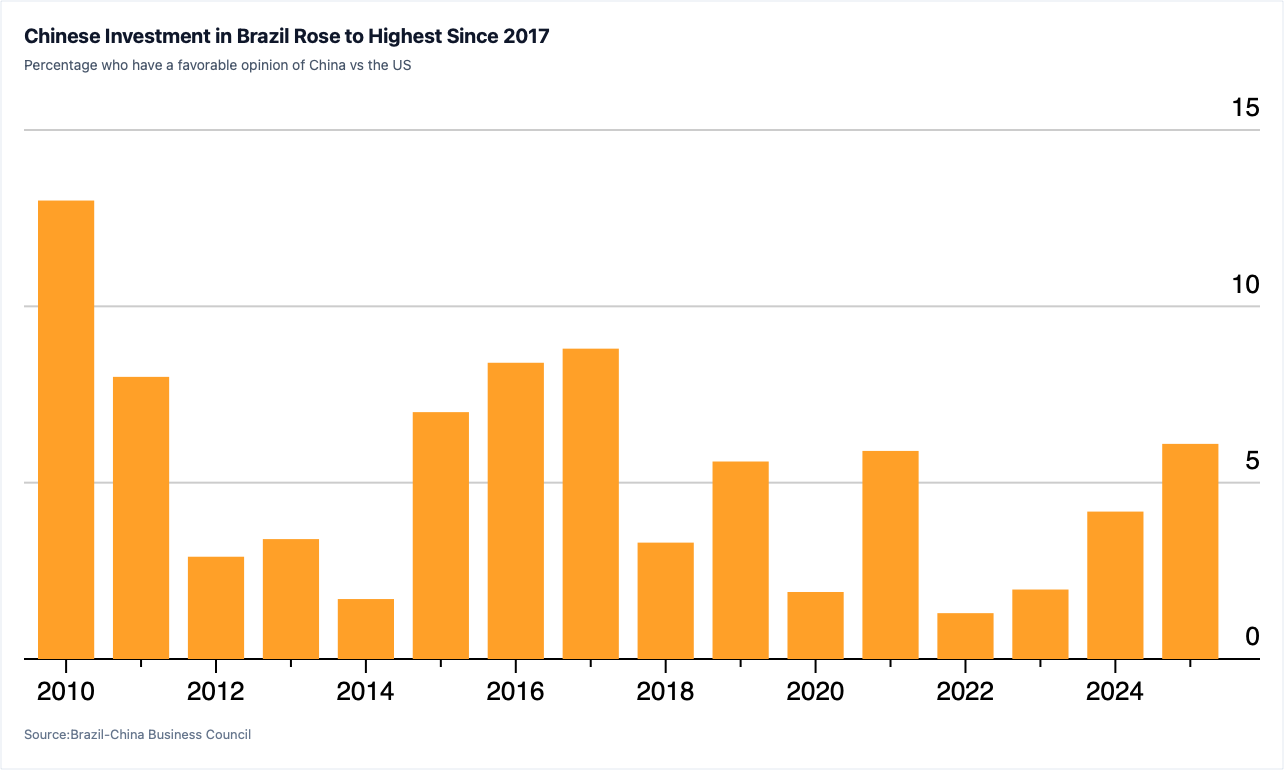
China's commercial diplomacy in Latin America demonstrates aggressive and practical characteristics, with Chinese companies embedding themselves at the grassroots level through lower costs and high adaptability, while also gaining a leading edge in tech areas like autonomous vehicles and drones. Although the US Trump administration is actively pushing policies aimed at securing political influence and economic dominance, China's massive investments and economic standing accumulated over the years in the region have become too entrenched to be easily replaced.
In the face of US political pressure, China has not retreated from the Latin American market but instead pivoted toward more cautious and adaptive investment strategies, shifting focus from high-profile government infrastructure to the private sector and critical minerals. Furthermore, China is actively expanding into batteries, financial services, and consumer markets, penetrating the daily lives of locals through aggressive marketing by electric vehicle brands and e-commerce platforms.
Latin American countries face a difficult balancing act amid the rivalry between the US and China. For these nations, economic realities often override ideology, and they would endure unbearable economic costs if compelled to sever their financial ties with Beijing, meaning they must carefully navigate between the two superpowers to protect their national interests.